Why freezing damages a tote
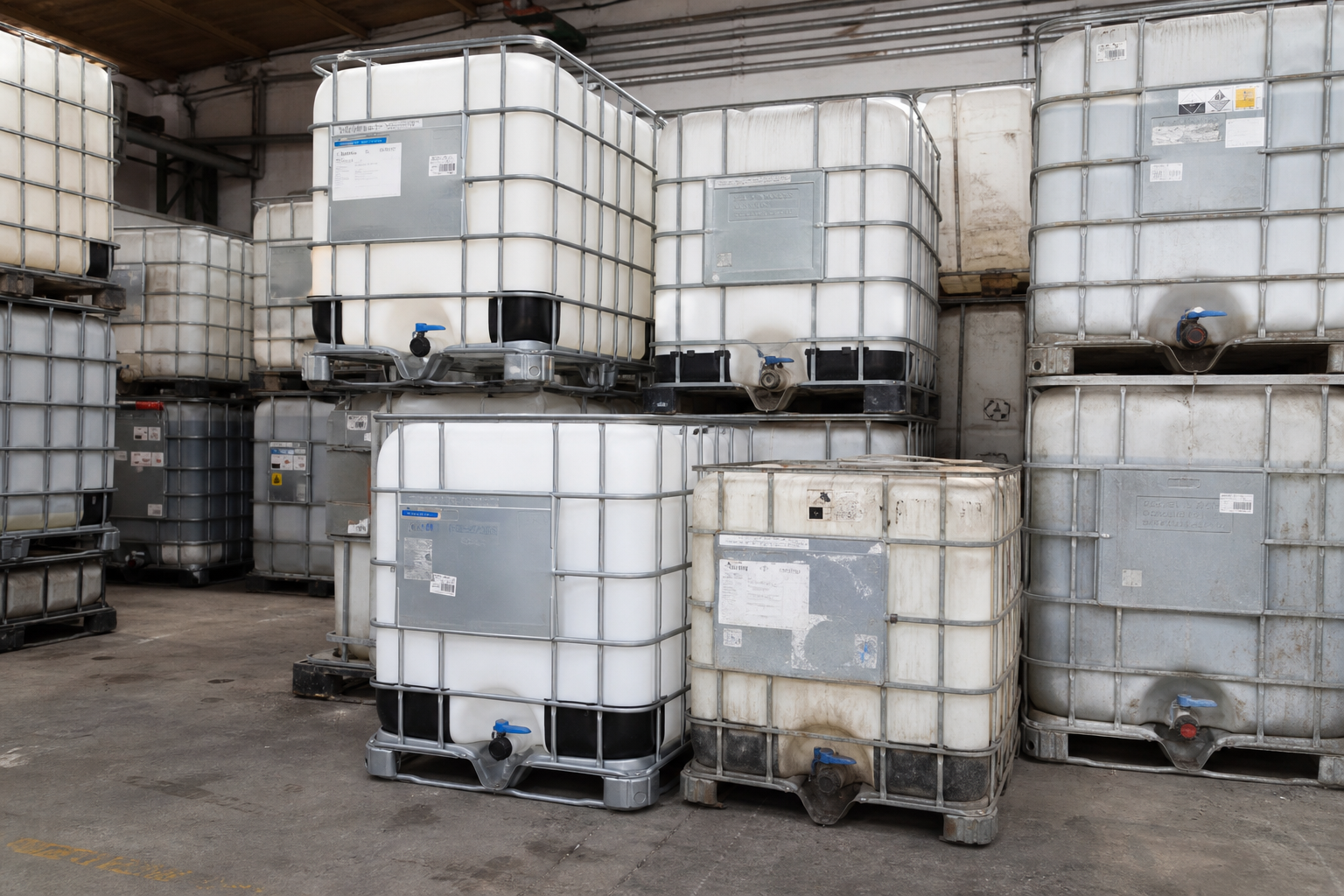
Water expands as it freezes, and that expansion is powerful enough to split rigid containers. An IBC tote's HDPE bottle is tough, but a fully frozen 275 or 330 gallon tank puts enormous outward pressure on the plastic and can bulge or crack the bottle, distort the steel cage, and rupture the valve, which is often the first component to fail.
The damage frequently shows up not during the freeze but during the thaw, when a cracked bottle or split valve suddenly leaks its contents. Planning ahead in autumn is far cheaper than replacing burst totes and cleaning up spills in spring.
The simplest protection: drain it
For any tote you do not need through the cold months, the best freeze protection costs nothing: empty it. Drain the bottle completely through the outlet valve, then open the top cap to let air circulate and prevent condensation from pooling and freezing inside.
Leave the valve open or partly open so any water that does collect has somewhere to go rather than freezing in the narrowest, most vulnerable part of the container. Store drained totes where they are protected from standing water, and you can forget about them until warmer weather.
Insulation jackets and wraps
For totes that must stay filled and in service, insulation slows heat loss and buys you time. Purpose-made IBC insulation jackets wrap the bottle and cage, and some include an insulated top cover. They will not add heat, but by trapping whatever warmth the contents hold, they delay freezing significantly in all but the harshest conditions.
Insulation works best when combined with a heat source or when the tote starts warm and is used regularly. On its own, a jacket is a delaying tactic rather than a guarantee, so match the level of protection to how cold your winters actually get.
Tank heaters and heated jackets
When contents absolutely cannot freeze, add heat. Heated IBC jackets and drum-style heating blankets wrap the tote and gently warm the contents to a set temperature, while immersion or band heaters can maintain a target temperature for sensitive products. Many systems pair a heater with a thermostat so energy is used only when temperatures drop.
Combine a heater with an insulation jacket for efficiency: the insulation holds the warmth in so the heater cycles far less. Always follow the equipment ratings, keep electrical connections dry and protected, and make sure the product being warmed tolerates the heat you are applying.
- Heated jackets warm the whole bottle to a set temperature
- Band and immersion heaters suit specific products and setups
- Thermostats cut energy use by heating only when needed
- Pair heaters with insulation so they cycle less often
- Keep all electrical connections dry, rated and protected
Movement, recirculation and antifreeze
Moving water resists freezing, so keeping the contents in motion helps. Recirculation pumps or agitators that periodically stir the liquid prevent a static tank from developing ice, which is especially useful in process settings where a tote is part of a loop anyway.
For certain applications, adding an appropriate freeze-point depressant lowers the temperature at which the liquid will freeze. This only works where the additive is compatible with the product and its end use, so it is a solution for water-based utility fluids and washer mixes rather than for products with strict purity requirements.
Siting totes to stay warmer
Where a tote sits changes how hard winter hits it. Moving totes indoors, into a heated space, or even into a shed or garage dramatically reduces freeze risk. If they must stay outside, group them together so they share warmth, place them out of the wind, and keep them off frozen ground on a pallet or insulated pad.
A sunny, wind-sheltered south-facing wall stays noticeably warmer than an exposed north corner. These small siting choices are free and can be the difference between a tote that rides out a cold snap and one that cracks.
Inspect before and after winter
Before the first hard freeze, check every tote you plan to keep filled. Confirm the valve seals, the bottle shows no existing stress cracks, and the cage is sound, because a weak container is far more likely to fail under freeze stress. Replace worn gaskets and questionable valves now rather than mid-winter.
When spring arrives, inspect again for new bulges, cracks or valve leaks that may have developed during the cold. Catching a compromised tote before you refill it prevents a spill and lets you recycle a failed bottle responsibly.
Need cold-weather-ready totes or replacements
Whether you need sound reconditioned totes going into winter, replacement valves and gaskets, or advice on protecting a fleet through the season, starting with quality containers makes every protection strategy work better.
Reach out to IBC Tote Solutions through our quote form or at info@ibctotessolutions.com. We can supply inspected, leak-tested totes and the right hardware to keep your operation running through the cold.