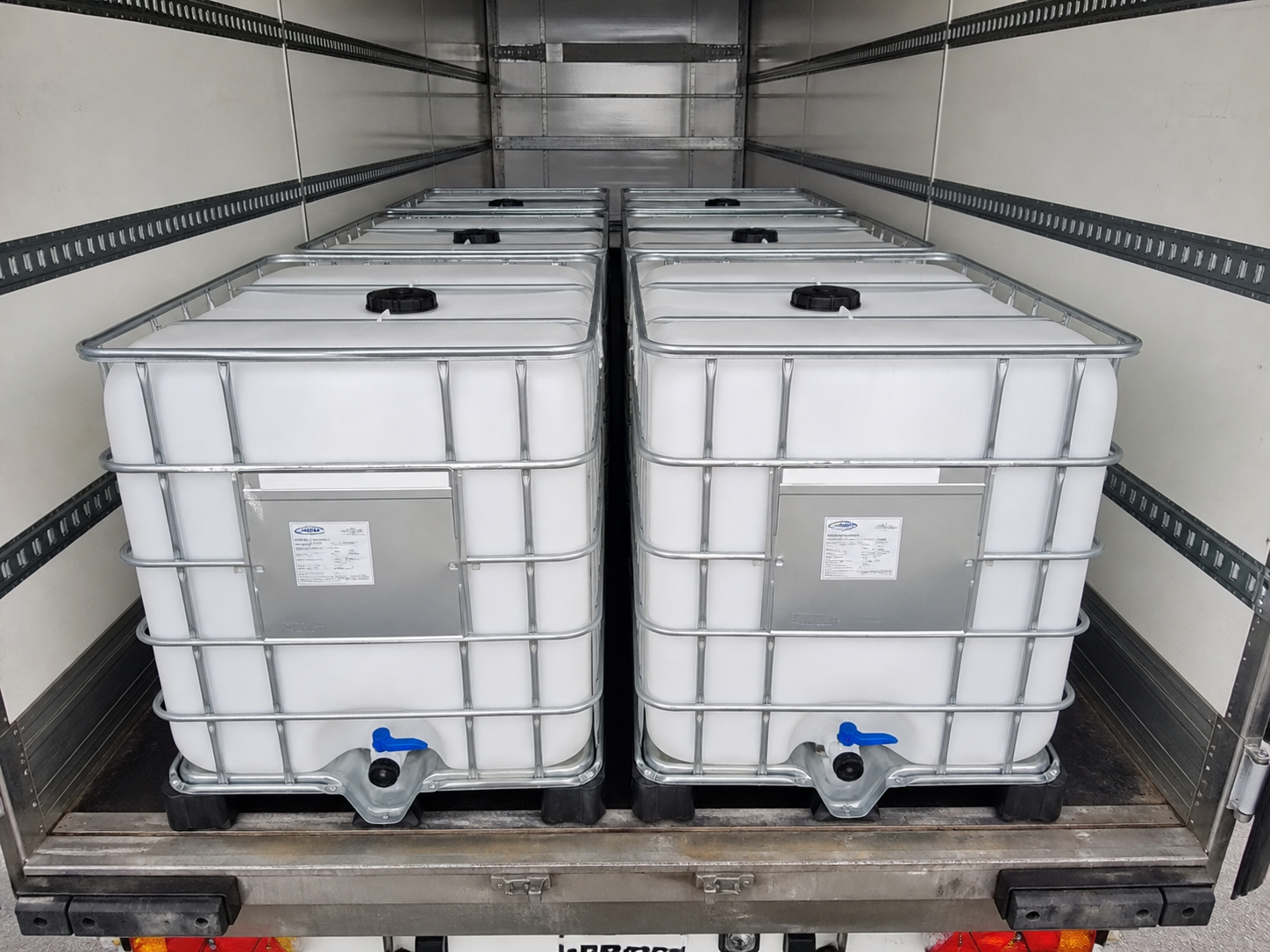
The Base Does More Than Hold the Tote Up
When people compare IBC totes they focus on the bottle and the cage, but the pallet base quietly decides how the container performs in daily use. The base bears the full loaded weight, provides the forklift and pallet-jack entry points, and determines whether the tote can safely sit in wet or hygienic environments.
There are three common base styles, and choosing the right one for your operation prevents corrosion, cracking, and handling delays down the road. This guide compares them across the four factors that matter most: durability, hygiene, forklift access, and cost.
Reusing a sound tote of any base type is greener and cheaper than buying new, so the real question is simply which base fits your product and your handling equipment.
Steel Bases: Maximum Strength
A steel base is a welded or bolted metal frame, usually galvanized, that matches the ruggedness of the steel cage above it. It is the choice when totes will be stacked while full, dropped onto hard surfaces, or handled roughly and repeatedly.
Steel also tolerates heat better than plastic, which matters if you fill with hot product or store totes near heat sources. The tradeoff is corrosion. The feet and lower frame sit closest to spills and standing water, and over years that is where rust starts. Steel bases are also the heaviest, adding to shipping weight.
- Best raw strength and stacking capability
- Handles hot fills and warm storage areas
- Heaviest option, which adds freight cost
- Prone to rust at the feet in wet conditions
- Ideal for industrial and outdoor duty cycles
Plastic Bases: The Hygienic Choice
A full plastic base is molded from high-density polyethylene, the same family of plastic as the bottle. Its headline advantage is hygiene. There are no metal crevices to trap residue, nothing to rust, and the smooth surfaces wash down cleanly, which is why plastic bases dominate food, beverage, cosmetic, and pharmaceutical applications.
Plastic is also completely corrosion-proof, so it shrugs off spills of acids, caustics, and salt solutions that would attack steel. The limitation is toughness under abuse. A hard drop or a mis-driven fork tine can crack a plastic runner, and plastic softens under high heat. For clean, indoor, moderate-duty work, though, it is often the smartest pick.
Composite Bases: The Practical Middle
A composite base combines a steel frame for strength with a plastic deck or plastic-encased feet for hygiene and corrosion resistance. It aims to capture the best of both worlds: the load capacity of steel with a cleaner, rust-resistant contact surface.
This is the base you see on a large share of general-purpose reconditioned totes because it is versatile enough for most jobs. It costs more than a plain plastic base but resists the field damage that plastic can suffer. If your operation mixes some rough handling with a need for decent washability, composite is usually the safe default.
Forklift and Pallet Jack Access
How a base is built also changes how you move it. Most IBC bases offer four-way entry so a forklift can approach from any side, but the tine openings and pallet-jack clearances vary between designs. Before standardizing on a base type, confirm your trucks and jacks fit its openings, especially if you run narrow-tine electric jacks.
Steel frames tend to have the most consistent, generous openings. Some economy plastic bases have shallower channels that a standard pallet jack cannot fully seat under, which slows down a busy dock. It is a small detail that becomes a daily annoyance if you get it wrong across a fleet.
- Confirm four-way versus two-way fork entry
- Measure tine openings against your forklift tines
- Check pallet-jack clearance for electric and manual jacks
- Standardize one base style across a site to speed handling
- Watch for shallow channels on economy plastic bases
Cost Over the Life of the Tote
On the day of purchase, plastic bases are often the lowest cost, steel sits in the middle to high range depending on galvanizing, and composite typically carries a small premium. But sticker price is only part of the picture.
The base that lasts the most reuse cycles wins on cost per trip. A steel base that rusts out in a damp yard may be a false economy, while a plastic base that cracks under rough handling can be too. Match the base to your actual conditions and you will get the most cycles, and the lowest true cost, from every tote.
Matching a Base to Your Operation
As a quick rule: choose steel for heavy, hot, or outdoor industrial duty; choose plastic for food, beverage, and clean indoor work; and choose composite when you want a durable, washable all-rounder. Also consider whether the base type you pick is easy to source again, because a consistent fleet is simpler to maintain and reuse.
IBC Tote Solutions stocks reconditioned totes on all three base styles and can advise which fits your product, your handling gear, and your washdown routine. Send your requirements through our quote form or email info@ibctotessolutions.com and we will point you to the base that will serve you longest.