New vs Reconditioned
Three ways to buy a tote. One clear framework.
New, rebottled, or reconditioned — the right answer depends on your interior-purity needs and your budget. Here's the honest side-by-side so you can choose fast.
Quick answer: Reconditioned totes cost the least and cut the most carbon. Rebottled totes add a brand-new bottle for virgin-interior purity at a mid price. New totes suit only the strictest virgin-only specs. Most buyers should start reconditioned.
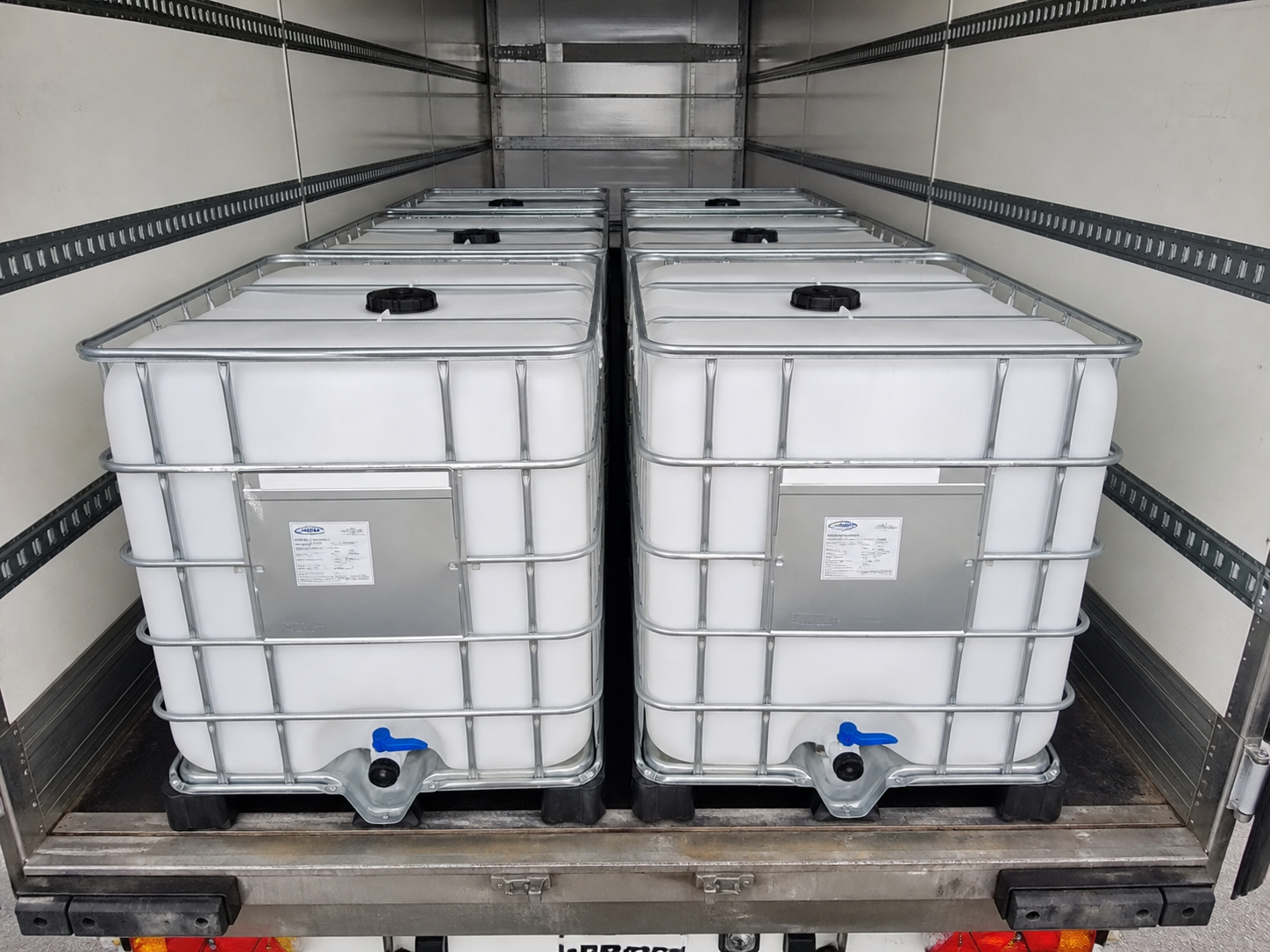
The comparison
Side by side, no spin.
| Factor | New | Rebottled | Reconditioned |
|---|---|---|---|
| Relative cost | Highest | Middle | Lowest (40–65% less) |
| Interior | Virgin HDPE | Virgin HDPE (new bottle) | Cleaned, graded, documented |
| Carbon footprint | Full new production | Bottle only — cage reused | Lowest — whole tote reused |
| Prior-contents concern | None | None | Documented per tote |
| Lead time | Production run | Usually in stock | In stock in Berea |
| Best for | Strict virgin-only specs | Beverage / pharma on a budget | General liquids, chemicals, water |
Reconditioned
The default for the vast majority of liquids. Same spec as new, documented history, lowest cost and carbon.
Rebottled
New HDPE bottle in a reconditioned cage. Choose it when you need a virgin interior but still want to cut cost and footprint.
New
Reserved for specs that contractually require an all-new assembly. We offer it — and we'll tell you when you don't need it.
Where the money goes
Cost, broken down part by part.
The price gap between new and reconditioned is not a discount — it is the cost of the virgin resin and steel you skip. Follow each component and you can see exactly why reconditioned lands 40 to 65 percent lower without giving up capacity or rating.
| Component | New | Rebottled | Reconditioned |
|---|---|---|---|
| The steel cage | Bought new every unit | Reconditioned — reused | Reconditioned — reused |
| The HDPE bottle | Molded new — the priciest part | Molded new | Cleaned and inspected — reused |
| The pallet base | New steel, composite, or wood | Reconditioned — reused | Reconditioned — reused |
| Labor & handling | Assembly only | Rebottle, fit, test | Wash, inspect, grade, document |
| Where the money goes | Mostly new raw material | Split — new resin, reused frame | Mostly labor, not material |
Carbon comparison
The footprint gap is the whole point.
Every tote you reuse is virgin resin and steel that never had to be made. Here is how the three options stack up from highest footprint to lowest.
New: full production burden
Every new tote carries the embodied carbon of virgin HDPE resin, galvanized steel for the cage, and a fresh pallet — plus the energy to mold, weld, and assemble all of it. It is the highest-footprint way to put liquid in a box.
Rebottled: the middle path
Rebottling reuses the cage and pallet — the steel-heavy, carbon-heavy parts — and molds only a new bottle. You cut a large share of the footprint while still getting a virgin interior. It is the greenest way to guarantee an untouched interior.
Reconditioned: the lowest by far
Reconditioning reuses the entire assembly. No new resin, no new steel, no new pallet — just cleaning, inspection, and documentation. It is the lowest-carbon tote on the market and the reason reuse beats recycling every time.
Purity & traceability
The paper trail behind every option.
“Used” does not mean “unknown.” The difference between the three options is documentation, not mystery — and here is exactly what documentation you get.
Prior-contents record
Every reconditioned tote ships with a documented history of what it last held. You are never guessing. Rebottled and new totes carry no prior contents at all, so the question is closed for them.
Cleaning & inspection log
Reconditioned units are washed to a defined level and inspected against a checklist — bottle clarity, cage integrity, valve function, pallet soundness — with the result recorded per unit.
UN/DOT compliance
Need to ship regulated goods? We supply totes with valid UN31HA rating plates, documented pressure-test dates, and compliant fittings, whether the unit is new, rebottled, or reconditioned.
Food-safe verification
For edible and beverage use, food-grade totes carry a contents history limited to food-safe cargo plus a cleaning record — the paper trail your quality team and auditors will ask for.
Decision guide by industry
Start with what you actually put in the tote.
The right choice tracks your purity spec more than your industry — but industries cluster in predictable ways. Find yours, then confirm the grade against your exact contents.
Rebottled or food-grade
When an untouched, food-safe interior is non-negotiable but budget still matters, a new bottle in a reconditioned cage gives virgin purity at a mid price.
Reconditioned
For solvents, cleaners, coatings, and general chemistry, a cleaned and documented reconditioned tote meets spec at the lowest cost and carbon.
Reconditioned
Fertilizers, foliar feeds, and irrigation water rarely need a virgin interior. Reconditioned is the workhorse; go food-grade only if the same tote later feeds edibles.
Reconditioned or food-grade
Non-potable process and greywater run on reconditioned totes; potable storage steps up to documented food-grade.
Rebottled or new
Tight purity and traceability specs push toward a virgin interior — rebottled when budget allows a reused frame, new when the spec forbids it.
Reconditioned (any grade)
Ballast, wash water, dust suppression, fuel-adjacent staging — cosmetic condition barely matters, so the lowest-cost reconditioned unit wins.
Total cost of ownership
The gap widens over multiple cycles.
Buy once, use for years
A reconditioned tote holds the same 275- or 330-gallon capacity and the same UN rating potential as new. Across a normal service life it carries the same volume of liquid for a fraction of the up-front spend.
Return, refill, repeat
Because we buy totes back, a reconditioned unit can re-enter the loop when you are done. Over multiple cycles the cost-per-use of reused totes pulls even further ahead of buying new each time.
No premium for the label
New totes cost more largely because of the virgin resin and steel in them — material you do not benefit from once the tote is holding liquid. Reconditioned pays for the work, not the label.
You pay for the work, not the label. And we buy it back when you're done.
Myths, corrected
Four things people get wrong about reconditioned.
Reconditioned totes are weaker than new.
False. A reconditioned tote is inspected against the same structural criteria and can carry the same UN31HA rating as new. Units that fail inspection are not reconditioned — they are recycled. What ships meets spec.
You can never know what a used tote held.
False. Every reconditioned tote we sell carries a documented prior-contents record. If a virgin interior is truly required, that is exactly what rebottled and new totes are for — but for most liquids, a documented history is all you need.
Buying new is safer for compliance.
Not inherently. Compliance depends on a valid UN plate, current pressure-test dates, and compatible fittings — all of which reconditioned totes can carry. New gives you no compliance advantage a properly documented reconditioned tote lacks.
The cost savings aren't worth the hassle.
The savings run 40 to 65 percent versus new, on an item that does the identical job. There is no hassle premium: reconditioned totes are in stock in Berea, documented, and ready — often faster than a new production run.
Questions we get
New vs reconditioned FAQ.
What exactly is a rebottled tote?
A rebottled tote is a brand-new, virgin HDPE bottle fitted into a reconditioned steel cage and pallet. You get an interior that has never held anything — the same purity as a fully new tote — while reusing the steel-heavy frame to cut both cost and carbon. It sits between new and reconditioned on price and is the greenest way to guarantee an untouched interior.
How much do reconditioned totes actually save?
Typically 40 to 65 percent versus a comparable new tote, depending on grade, availability, and quantity. The savings come from reusing the bottle, cage, and pallet — you pay for cleaning, inspection, and documentation rather than new resin and steel. Email info@ibctotessolutions.com for current pricing on your spec.
When do I genuinely need a new tote?
When a contract or regulatory spec explicitly requires an all-new assembly, or when a virgin interior is mandatory and a reused cage is also ruled out. For the first case new is the answer; for the second, rebottled usually satisfies the purity requirement at lower cost. We will tell you honestly when new is overkill.
Can reconditioned totes ship hazardous materials?
Yes, when they carry a valid UN31HA rating plate, current pressure-test dates, and compliant fittings. Reconditioned status does not disqualify a tote from hazmat transport — the rating plate and documentation do the qualifying. Specify UN/DOT-rated when you order regulated goods.
Which should most buyers start with?
Reconditioned. For the large majority of liquids, chemicals, and water, a cleaned and documented reconditioned tote meets spec at the lowest cost and the lowest carbon footprint. Step up to rebottled only when you need a guaranteed virgin interior, and to new only when a spec forbids anything reused.