Grades Explained
Grade A, food-grade, rebottled — decoded.
'Grade' means two different things depending on who's talking: condition or contents history. Here's the plain-English breakdown so you order exactly what you need.
Quick answer: Grade A/B describe a tote's physical condition; food-grade describes safe contents history + cleaning; rebottled means a new bottle in a reused cage; UN/DOT means it's rated to ship regulated goods. A tote can hold more than one grade at once.
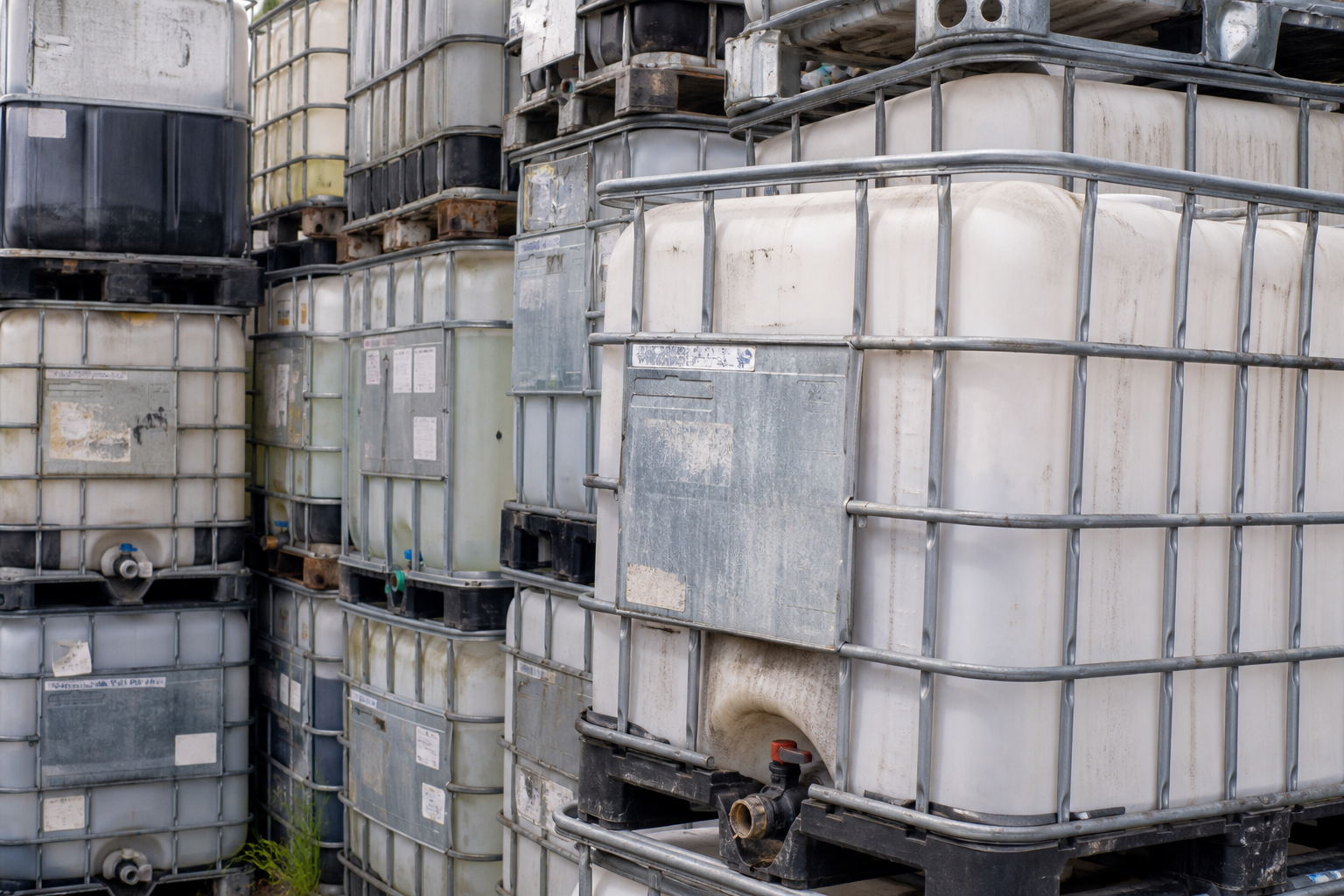
| Grade | Describes | What it means | Typical use |
|---|---|---|---|
| Grade A | Condition | A clean, structurally sound tote: clear bottle, straight cage, solid pallet, working valve. Grade A is about how the tote looks and holds up — not what it last held. | General industrial liquids, water, chemicals. |
| Grade B | Condition | Sound and serviceable with cosmetic wear — a cloudier bottle, minor cage marks, or an older pallet. Fully functional, easier on the budget. | Non-critical storage, secondary use, DIY projects. |
| Food-Grade | History | A tote that only ever held food-safe contents, built from FDA-compliant HDPE, and cleaned and documented for edible reuse. Food-grade is about contents history + cleaning, and a tote can be both Grade A and food-grade. | Beverages, syrups, edible oils, brewing. |
| Rebottled | New interior | A brand-new HDPE bottle dropped into a reconditioned cage and pallet. Zero prior contents, virgin interior, circular frame — new-bottle purity without a fully new tote. | When contents history must be a non-question. |
| UN/DOT Rated | Compliance | A tote carrying a valid UN31HA rating plate with documented pressure-test dates and compliant fittings, cleared for shipping regulated goods. | Hazardous or regulated liquids in transit. |
The key insight
Condition and history are two separate axes.
A tote can be pristine (Grade A) but have held a non-food chemical — so it's Grade A but not food-grade. Another can be cosmetically worn (Grade B) yet only ever held maple syrup and be triple-rinsed — food-grade but not Grade A. Always specify both when it matters.
Ask two questions: what shape is it in, and what did it hold?
Grade A vs Grade B
The condition axis, point by point.
Both grades are sound, serviceable, and leak-free — the difference is cosmetics and margin. Here is exactly what our graders look at when they call a tote A versus B.
| Checkpoint | Grade A | Grade B |
|---|---|---|
| Bottle clarity | Clear to lightly hazed, no cracks or deep gouges. | Cloudier or stained, still sound and leak-free. |
| Cage & welds | Straight bars, intact welds, minimal surface rust. | Minor bends or surface rust, structurally solid. |
| Pallet base | Solid steel, composite, or wood — no soft spots. | Older or scuffed pallet, still fork-and-stack safe. |
| Valve & fittings | Working valve, seals hold, threads clean. | Functional valve; may show wear at the gasket. |
Wash levels & rinse standards
Not all “cleaned” is the same clean.
The cleaning level a tote receives is matched to what it held and where it's going next. A triple-rinse suits general service; food-grade reuse demands more. Here are the levels we work to.
Standard reconditioned rinse
Three flushes of clean water to displace residual product, drained and inspected. The baseline for most non-critical reuse where the prior contents were benign.
Detergent or caustic wash
A heated detergent or caustic cycle that strips sugars, oils, and films the way a plain rinse cannot. The step that turns a syrup or beverage tote back into a food-grade candidate.
Sanitizing rinse
A food-safe sanitizing pass following the wash, for totes headed back into edible or potable service. Documented as part of the food-grade record.
Solvent or specialty flush
For stubborn coatings, resins, or chemistry a water wash won't touch. Applied case by case; some contents mean the tote is retired to recycling instead.
How grading works
From incoming tote to labeled grade, step by step.
Grading isn't a glance and a guess — it's a repeatable process with a record at the end. This is the path every tote runs before it earns its grade.
Intake & history pull
Every incoming tote is logged against its prior-contents record. Anything that held cargo we won't recondition is diverted to recycling before it ever hits the wash line.
Empty, drain & pre-rinse
The tote is fully emptied and pre-rinsed so inspection happens on a clean vessel, not a coated one. Residue hides defects.
Wash to the required level
The wash level is matched to the intended reuse — triple-rinse for general service, hot-wash and sanitize for food-grade candidates.
Structural inspection
Bottle, cage, welds, pallet, and valve are checked against the grading checklist. Failures are repaired, downgraded, or recycled — never sold as passing.
Grade, document & label
The tote is assigned its grade, the cleaning and inspection result is recorded, and it is labeled so what you receive matches what you ordered.
Documentation & certificates
What paperwork rides with the tote.
A grade is only as good as the record behind it. Depending on the grade you order, your tote can ship with a prior-contents history, a cleaning and inspection log, food-safe verification, and — for regulated transport — a valid UN31HA plate with current test dates. Ask for the paper; a reputable supplier will always have it.
A grade you can't document is a grade you can't trust.
Match grade to application
Find your use, read across to the grade.
The fastest way to order right is to start from what you're putting in the tote and where it's headed. This table maps common applications to the grade that fits and the one detail that most often gets missed.
| Application | Recommended grade | Watch for |
|---|---|---|
| Potable water storage | Food-grade + Grade A | Documented food-safe history, shrouded against light. |
| Beverage / syrup / edible oil | Food-grade (or rebottled) | Hot-washed and sanitized, or a virgin bottle. |
| General industrial chemicals | Grade A | Condition matters; verify chemical compatibility. |
| Hazmat / regulated transport | UN/DOT-rated | Valid rating plate and current test dates required. |
| Pharma / high-purity | Rebottled or new | Virgin interior; documentation-heavy. |
| Non-critical storage & DIY | Grade B | Serviceable and lowest cost; cosmetics aside. |
Red flags when buying elsewhere
Four warning signs on a used-tote listing.
Not every seller grades honestly. If you're sourcing totes outside our yard, these are the signs that a “grade” is a guess — and that you're buying risk, not value.
No prior-contents record
If a seller can't tell you what a tote last held, you can't verify it's safe for your use. A blank history is a red flag, not a bargain — especially for anything edible or potable.
Food-grade claimed, no paper
Food-grade is a documented status, not a label someone paints on. If there's no cleaning and contents record, treat the tote as industrial regardless of what the listing says.
UN plate expired or missing
A UN31HA rating is only valid with current pressure-test dates. An expired or absent plate means the tote cannot legally ship regulated goods, whatever the seller claims.
Damage sold as cosmetic
Deep gouges, stress cracks, spread welds, or a soft pallet are structural, not cosmetic. If wear is waved off without inspection, walk away.
Glossary
The terms, in plain English.
HDPE
High-density polyethylene — the food-contact plastic every IBC bottle is molded from. Safe by material; reuse safety depends on history and cleaning.
Bottle
The molded plastic inner vessel that actually holds liquid, seated inside the steel cage.
Cage
The galvanized-steel frame that protects the bottle and lets the tote stack and be forklifted.
Rebottle
Replacing a used bottle with a brand-new one inside a reconditioned cage and pallet.
UN31HA
The UN packaging code marking an IBC rated to carry certain hazardous liquids, backed by pressure testing.
Triple-rinse
Three water flushes to displace residual product — the baseline reconditioning clean.
First-flush
Diverting the initial, dirtiest runoff before harvested water enters storage; relevant to repurposed cisterns.
Freeboard
The margin between the liquid level and the top of the vessel; a buffer against overflow and sloshing.
Questions we get
Grades FAQ.
Can one tote be more than one grade at once?
Yes, and this trips people up. Condition and history are separate axes. A tote can be Grade A in condition and also food-grade in history — pristine and only ever held syrup. Another can be Grade B cosmetically yet still food-grade if it only carried food-safe cargo and was properly washed. Always specify both the condition grade and the history grade when both matter.
What's the difference between food-grade and rebottled?
Food-grade means a used bottle that only ever held food-safe contents and was hot-washed, sanitized, and documented. Rebottled means a brand-new virgin bottle in a reconditioned cage, so there is no prior contents at all. Food-grade is verified reuse; rebottled sidesteps history entirely. Choose rebottled when contents history must be a complete non-question.
How do I know a food-grade claim is real?
Ask for the documentation: the prior-contents record showing only food-safe cargo, plus the cleaning and sanitizing log. Food-grade is a documented status, not a sticker. If a seller can't produce the paper trail, treat the tote as industrial no matter what the listing says.
Does a reconditioned tote lose its UN rating?
Not automatically — but the rating is only valid with a legible UN31HA plate and current pressure-test dates. Reconditioning doesn't erase the rating; an expired or missing plate does. If you're shipping regulated goods, order UN/DOT-rated specifically and confirm the test dates are current.
Which grade should I order if I'm not sure?
Tell us what you're putting in the tote and where it's going. For general liquids and chemicals, Grade A reconditioned is the workhorse. For anything edible or potable, step up to food-grade. For regulated transport, insist on UN/DOT-rated. Email info@ibctotessolutions.com with your contents and use, and we'll match the grade so you order right the first time.