The short answer
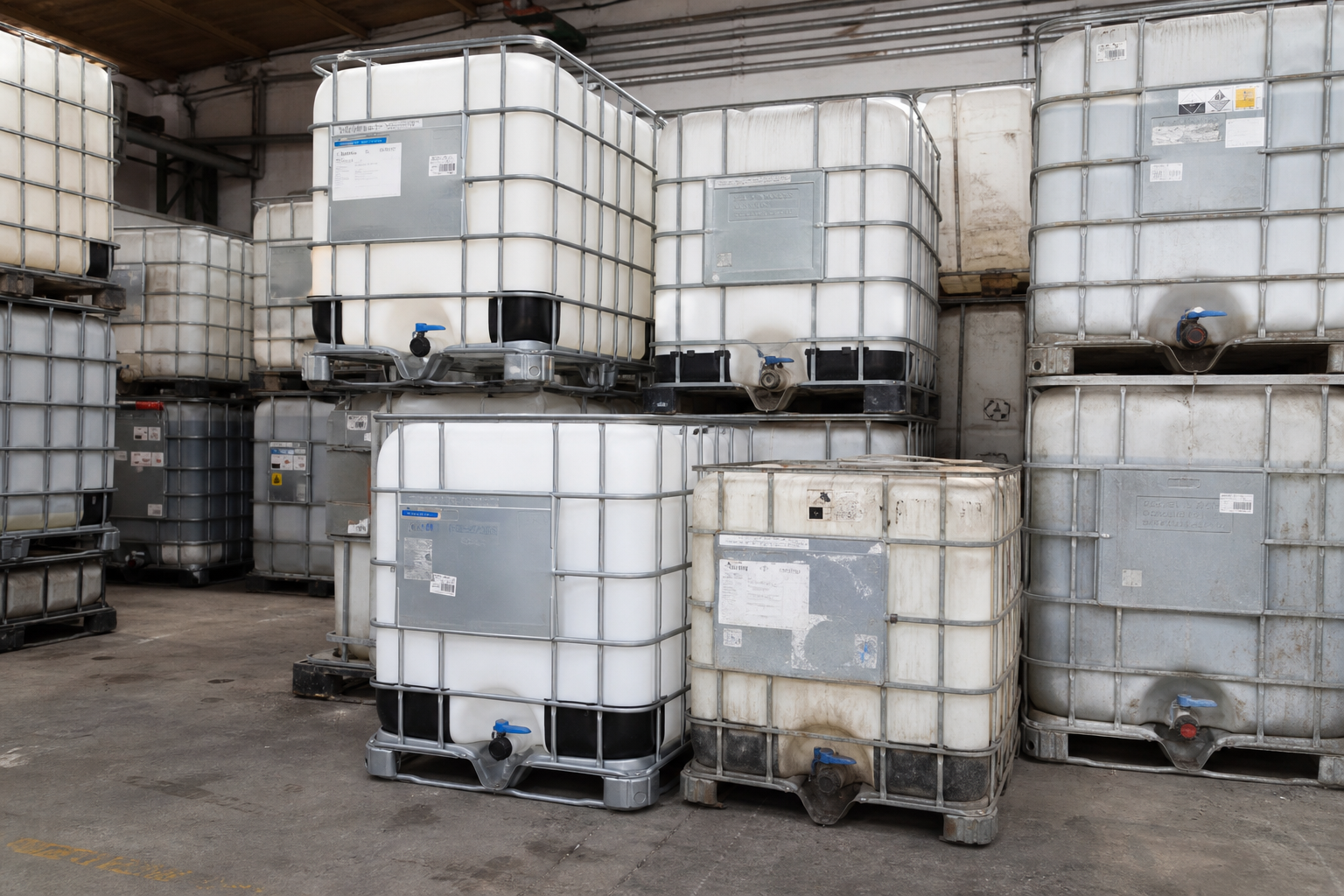
A food-grade IBC tote is one built from FDA-compliant HDPE that has only ever held food-safe contents and has been cleaned and documented for edible reuse. Two things must both be true: safe material and safe history. A brand-new bottle that later holds a solvent is no longer food-grade; a reused bottle that only held maple syrup and was triple-rinsed can be.
Material vs. history
The resin itself — virgin HDPE meeting FDA 21 CFR 177.1520 — is the baseline, and virtually all IBC bottles start there. The differentiator for reused totes is contents history: what the tote carried, whether that product was food-safe, and how thoroughly it was cleaned afterward.
This is why a credible reconditioner tracks prior contents per tote. When we sell a food-grade tote, we can tell you what it last held and provide a wash certificate. If a seller can't answer 'what was in it,' treat the tote as non-food-grade.
Questions to ask before you fill
Before any edible product goes in a reused tote, confirm the essentials:
- What did this tote last hold — and the two loads before that?
- Was it triple-rinsed or hot-washed, and is there a certificate?
- Are the gaskets food-safe (EPDM) and in good condition?
- Is the bottle free of odor, residue, and stress cracking?
Rebottled: the safest reused option
When contents history is a hard requirement, a rebottled tote — a new HDPE bottle in a reconditioned cage — removes the question entirely. You get a virgin interior with zero prior contents, wrapped in a circular frame. It's our most-requested option for beverage, brewing, and edible-oil customers.