Knowledge Hub · 7 min read · Updated 2026-06-01

IBC Tote Dimensions Explained: Every Size, Spec & Footprint

The complete reference on IBC tote sizes — 275 vs 330 gallon, footprints, heights, weights, and how to plan your floor space and freight.

Need totes, not just answers? Get a quote.

US ZIP (44017 or 44017-1234) or Canada (A1A 1A1)
US/Canada number, e.g. (216) 555-0123

No phone spam — we reply by email. Your details stay with us.

IBC Tote Dimensions Explained: Every Size, Spec & Footprint — IBC totes

The short answer

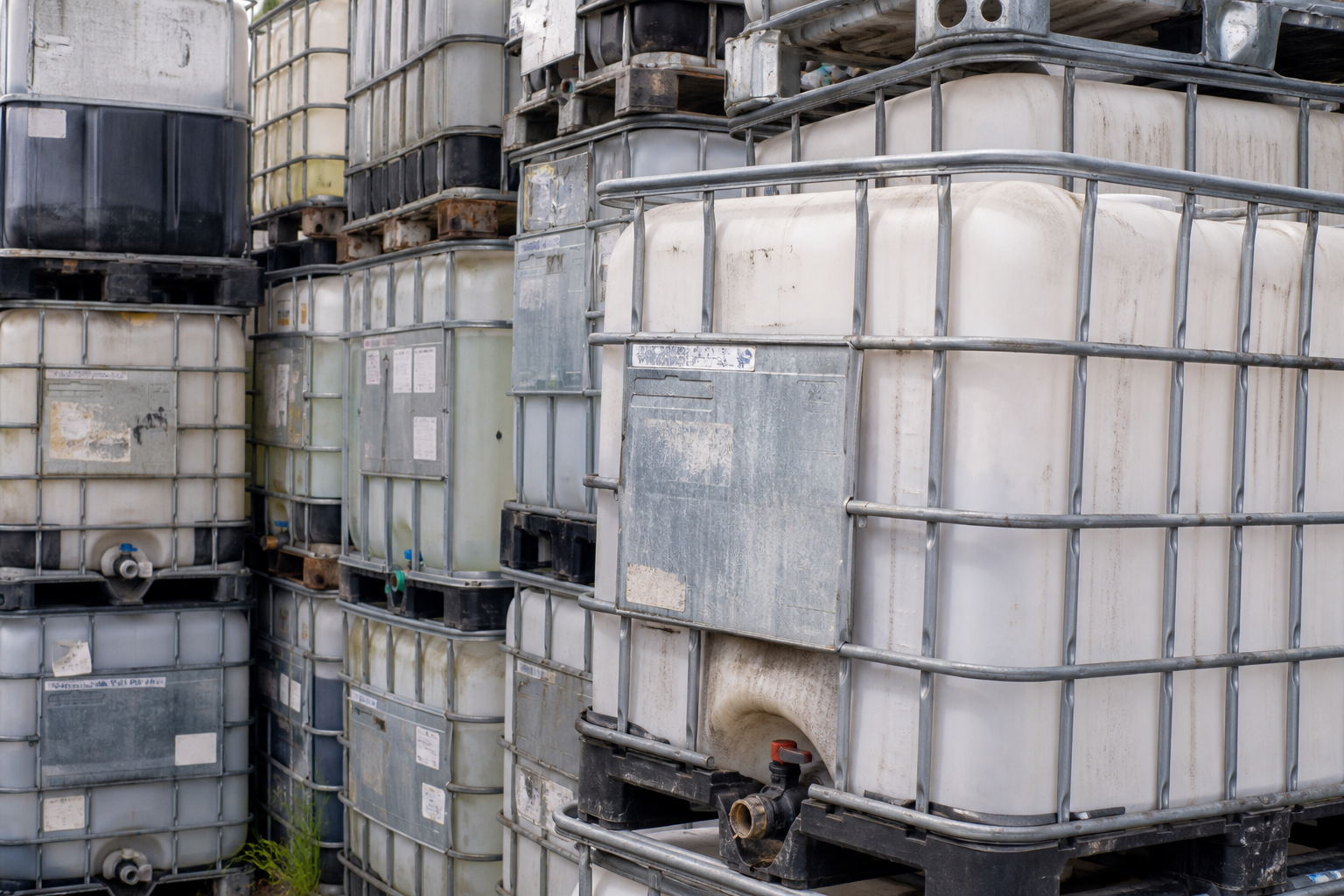
The two dominant IBC totes are the 275-gallon (1,040 L) and 330-gallon (1,250 L) caged composite bins. Both sit on the same 40 × 48-inch GMA pallet footprint; the 330 is simply taller (≈53 in vs ≈46 in). That shared footprint is the whole reason IBCs stack, ship, and store so predictably.

Why the footprint matters more than the gallons

Because 275 and 330 totes share a 40 × 48-inch base, you can mix them on the same rack, in the same truck, and on the same forklift without re-planning your space. Twenty totes fit a standard 53-foot dry van floor-loaded (single-stacked), or up to forty double-stacked when contents and cages allow.

When you're planning a room, count floor tiles, not gallons. Two 330s hold more liquid than two 275s in the exact same square footage — which is why high-volume users lean toward the 330 to buy more capacity per dock tile.

Heights, weights, and clearances

Empty caged totes weigh roughly 125–145 lb. Filled with water, a 275 approaches 2,400 lb and a 330 nears 2,900 lb, so rack and floor ratings matter. Add cap clearance above the tote for filling, and valve clearance below for draining into a drum or pump.

  • 275 gal: 40 × 48 × 46 in, ≈125 lb empty
  • 330 gal: 40 × 48 × 53 in, ≈145 lb empty
  • 120 gal low-profile: 40 × 48 × 28 in
  • 550 gal steel: 48 × 48 × 60 in

Reused totes, identical specs

A reconditioned tote holds the exact same dimensions and fitments as a new one — it's the same mold, the same cage, the same pallet. You lose nothing on spec by choosing reused, and you keep a 260-pound assembly of HDPE and steel in service instead of manufacturing it again. See our full Size Guide for the interactive table.

Talk to us about totes →

Key takeaways

The short version to carry with you.

If you skim nothing else, keep these four principles in mind whenever you buy, reuse, or retire an IBC tote.

  • Grade and prior-contents history matter more than headline price — they decide what you can safely fill.
  • Reused and reconditioned totes cut cost and carbon while diverting HDPE and steel from the landfill.
  • 275 and 330 gallon totes differ on pallet fit, clearance, and pump height, not just volume.
  • When a tote reaches end of life, sell it back, recondition it, or recycle it — never scrap the loop.

FAQ

Frequently asked questions.

What are the dimensions of a standard IBC tote?

A 275-gallon caged composite IBC measures roughly 40 × 48 × 46 inches, and a 330-gallon measures roughly 40 × 48 × 53 inches. Both share the same 40 × 48-inch GMA pallet footprint, so only the height changes between the two sizes.

Do 275 and 330 gallon totes take the same floor space?

Yes. Both sit on an identical 40 × 48-inch base, so they occupy the same square footage on a rack, in a truck, or on your dock. The 330 simply stands about seven inches taller, which buys you more capacity per floor tile.

How much does a filled IBC tote weigh?

Empty caged totes run about 125 to 145 pounds. Filled with water, a 275-gallon tote approaches 2,400 pounds and a 330-gallon tote nears 2,900 pounds, so confirm your rack and floor ratings before stacking or storing them loaded.

How many IBC totes fit in a 53-foot trailer?

Twenty totes fit floor-loaded and single-stacked in a standard 53-foot dry van, or up to forty when contents and cage condition allow double-stacking. We confirm the loading plan in writing with every freight quote.

Are reconditioned totes the same size as new ones?

They are identical. A reconditioned tote comes off the same mold with the same cage and pallet, so every dimension and fitment matches a new unit. You give up nothing on spec by choosing a reused tote.

About IBC Tote Solutions

A full-circle tote operation in Berea, Ohio.

We buy, sell, recondition, transport, repurpose, and recycle used — and select new — 275 and 330 gallon IBC totes. Sustainability is not a tagline here; it is the business model. Every tote we can keep in service is one that stays out of the landfill.

These guides are written from that hands-on work. If a section left you with a question specific to your contents, volume, or timeline, email info@ibctotessolutions.com and a real person will answer. We run by email and web form — no phone tree required.

Where to find us

IBC Tote Solutions LLC
931 W Bagley Rd
Berea, OH 44017

Email: info@ibctotessolutions.com

Read our story →

How we can help

Four ways to put this into practice.

Buy

Ready-to-fill totes

Sourced, inspected, and cleaned to the grade you need — from rinsed to food-grade and rebottled.

Buy totes →
Sell

Turn idle totes into cash

Have used totes taking up yard space? We buy them back and keep them in circulation.

Sell your totes →
Recondition

Restore what you own

Triple-rinse and inspection that brings a working tote back to a safe, documented grade.

Reconditioning →
Recycle

End-of-life, zero to landfill

When a tote is truly done, we separate the HDPE bottle and galvanized cage for recycling.

Recycling →
Get a Quote