Where Packaging Hides in Your Carbon Footprint
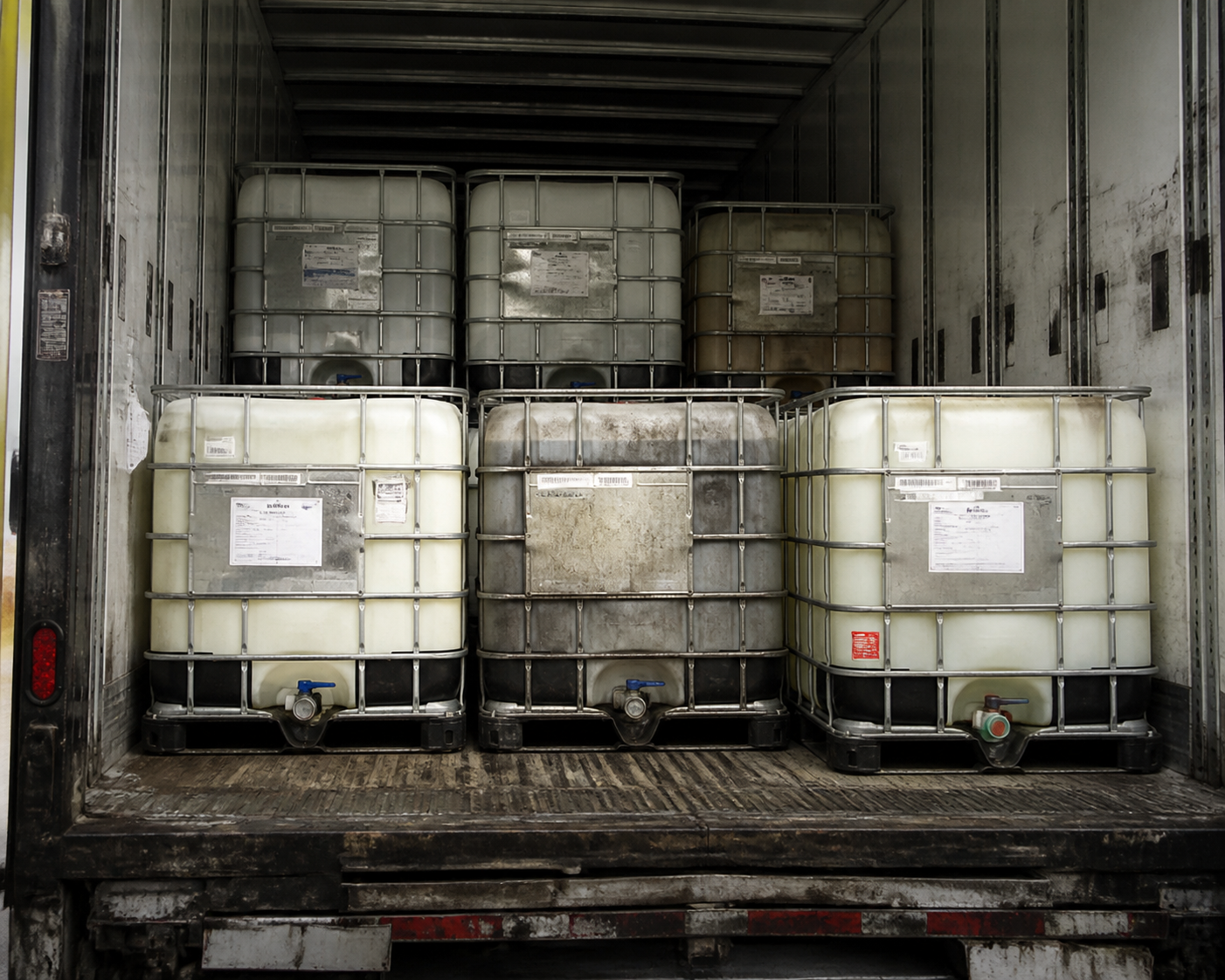
Most companies find that the majority of their carbon footprint sits in scope 3, the indirect emissions across the value chain rather than from their own facilities or purchased energy. Packaging is a classic scope 3 line item, and IBC totes are packaging that many operations buy, use once, and discard by the thousand.
Every new IBC tote carries an embedded footprint from producing the polyethylene bottle, forming the steel cage, and shipping the finished unit. When a tote is reused instead of replaced, that manufacturing footprint is avoided entirely. Reuse is not a marginal improvement; it removes a whole production cycle from the ledger.
The encouraging part is that the lowest-emission choice is usually also the lowest-cost choice, which makes the sustainability case an easy one to sell internally.
Reuse Beats Recycling on Emissions
It helps to be precise about the waste hierarchy. Recycling grinds a container back into raw material and re-manufactures it, which consumes energy and often downgrades the plastic. Reuse keeps the container intact and simply cleans and returns it to service, avoiding almost all of that energy.
That is why a reconditioned tote generally beats a recycled-content new tote on emissions. A used IBC that is washed, inspected, and put back to work delivers many more service cycles for the carbon already spent making it. Recycling should be the destination only when a tote is genuinely at end of life.
Build Reuse Into Procurement
Emissions reductions become real when they are written into how you buy. Procurement is the lever, because the decision to specify reconditioned totes or a return program is made at the purchase order, not in a sustainability report afterward.
Update your purchasing standards so that reconditioned containers are the default and new units require a justification. Add container reuse to supplier scorecards and requests for quotes. When buyers are measured on it, reuse stops being an afterthought and becomes routine.
- Set reconditioned totes as the default purchasing option
- Require justification when buying new instead of reused
- Add a container reuse question to every supplier RFQ
- Include reuse metrics on procurement scorecards
- Budget for return freight as a line item, not an exception
Measure and Report Diversion
You cannot manage what you do not count. Diversion reporting means tracking how many totes you kept out of landfill or incineration by reusing, reselling, repurposing, or recycling them, and translating that into weight and avoided emissions.
Start simple. Count totes diverted per month, multiply by the average weight of a tote, and you have a diversion tonnage figure for your waste reports. Pair it with an estimate of avoided manufacturing emissions per reused unit and you have a number that belongs in your annual disclosures. Auditable figures also protect you against greenwashing claims because they are grounded in real container counts.
Close the Loop With Supplier Programs
The most durable reductions come from closed-loop programs where empty totes are recovered rather than thrown out. In a supplier take-back or return-refill arrangement, the same containers cycle between you and your partners many times, and each cycle avoids a new tote.
These programs also create predictable reverse-logistics routes, which cut the emissions of empty container movement when planned well. A reuse partner who both supplies reconditioned totes and collects your empties turns a one-way expense into a circular system. Over a year, a well-run loop can slash both packaging spend and packaging emissions at the same time.
Put Numbers Behind the Program
To keep momentum, give leadership metrics they can track quarter over quarter. Reuse rate, diversion tonnage, avoided emissions, and container cost per cycle together tell a clear story of a program that is working.
Set a baseline in your first quarter and a target for the next, then report progress against it. When the same initiative shows falling costs and falling emissions side by side, funding and expansion follow naturally.
- Reuse rate: share of totes reused versus discarded
- Diversion tonnage: weight of containers kept from disposal
- Avoided emissions: estimated footprint of new totes not made
- Cost per cycle: total container cost divided by trips taken
- Recovery rate: share of empties successfully returned
A Partner for the Circular Loop
Cutting scope 3 emissions from packaging does not require exotic technology. It requires choosing reuse first, counting the results, and building return loops with partners who can supply and recover containers reliably.
IBC Tote Solutions supports every part of that loop. We supply inspected reconditioned totes, buy back and recover your empties, repurpose or recycle units at true end of life, and can provide the diversion figures your reporting needs. To design a reuse program that lowers both your emissions and your costs, use our quote form or email info@ibctotessolutions.com.