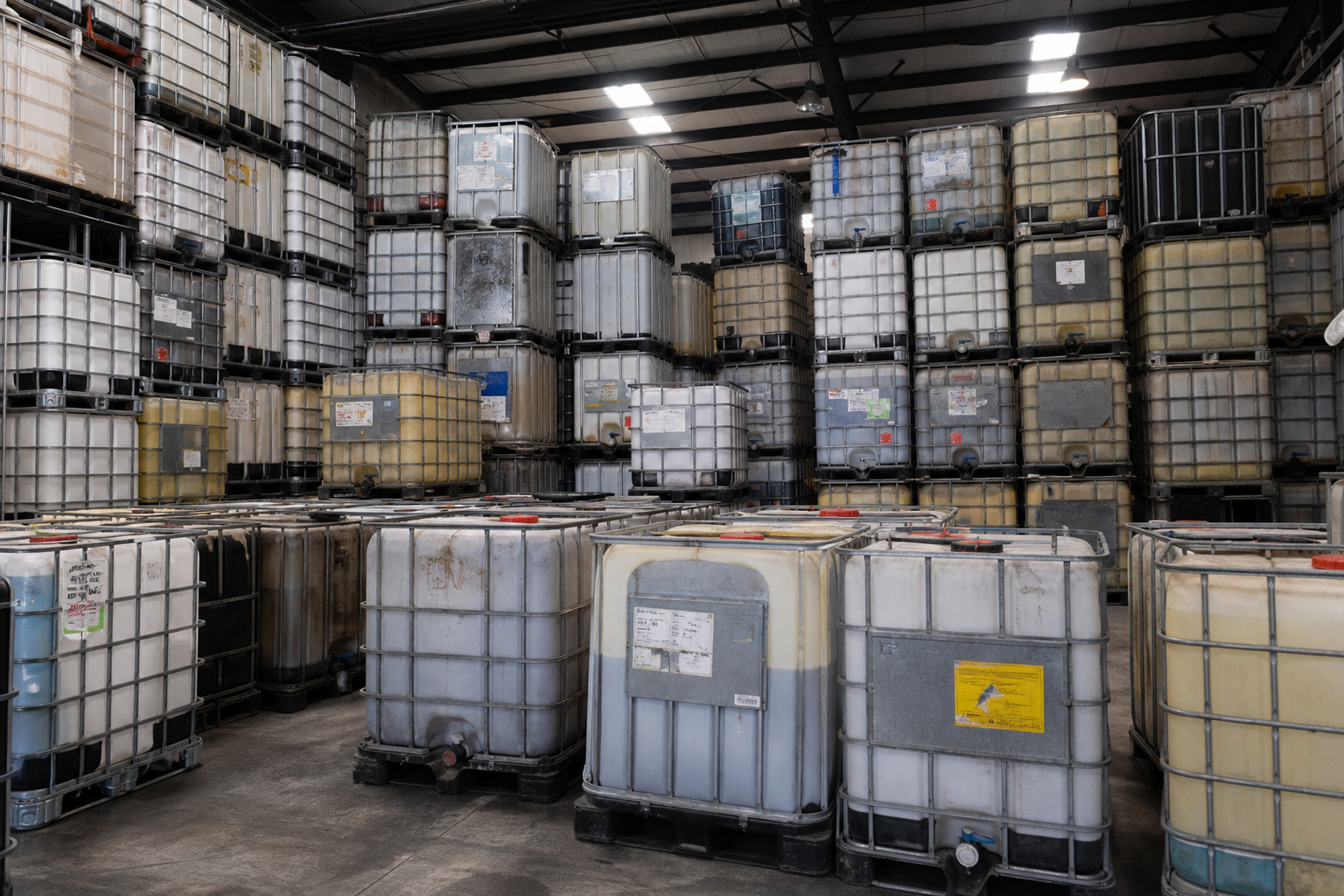
What is actually in an IBC tote
To understand the carbon math, start with the materials. A standard caged IBC tote is a 275 or 330 gallon HDPE bottle inside a welded galvanized steel cage, mounted on a pallet base with a footprint near 40 by 48 inches. The plastic bottle typically weighs on the order of tens of pounds, and the steel cage and base add substantially more, so a complete unit can weigh over a hundred pounds empty.
Every one of those pounds represents energy that was spent extracting, refining and forming the material. That upfront energy is called embodied carbon, and it is spent before the tote ever holds a single gallon of product. Reuse is powerful precisely because it lets you skip paying that upfront cost a second time.
The HDPE bottle: oil in, energy in
High-density polyethylene is made from fossil feedstocks. Producing virgin HDPE resin consumes energy at every stage, from cracking hydrocarbons to polymerizing and pelletizing the plastic, and then more energy is used to blow-mold the pellets into a large bottle.
As a rough planning figure, producing a kilogram of virgin HDPE releases on the order of two kilograms of CO2 equivalent when you account for feedstock and processing. Multiply that by the mass of a large IBC bottle and the bottle alone accounts for a meaningful chunk of carbon before you add the cage.
The steel cage: the heavy hitter
The galvanized steel cage and base are usually the largest single contributor to a tote's footprint, simply because there is more mass of steel than plastic. Virgin steel is carbon-intensive to produce, and galvanizing adds a zinc coating step on top of that.
Common planning figures put primary steel somewhere around two kilograms of CO2 equivalent per kilogram of metal. Because the cage and base weigh more than the bottle, the steel structure often dominates the total embodied carbon of a new tote. This is exactly why rebottling, which keeps the steel and swaps only the plastic, is such an efficient way to extend a tote's life.
Adding water and transport to the picture
Manufacturing also consumes water and generates upstream emissions in mining, refining and power generation. And a brand-new tote has to be shipped from the factory to a distributor and then to you, adding freight emissions on top of the production footprint.
Reusing a local, already-in-circulation container short-circuits much of that. A reconditioned tote skips fresh resin production, skips new steelmaking, and often travels a shorter distance. The wash process does use water and energy, but it is a small fraction of what building a new container from raw materials requires.
Reuse versus new, in plain terms
When you reuse or recondition a tote, the biggest carbon costs are already sunk into a container that exists. The incremental footprint of cleaning and repairing it is modest. When you buy new, you pay the full embodied carbon of fresh HDPE and fresh steel all over again.
The financial math points the same direction, which is the encouraging part. Reconditioned totes typically sell for a fraction of new prices, so the greener choice is also usually the cheaper one. Sustainability and budget line up instead of fighting each other.
- Reuse avoids new virgin HDPE production for the bottle
- Reuse or rebottling keeps carbon-heavy steel in service
- Local reconditioned stock cuts freight distance and emissions
- Wash and repair energy is small next to raw material production
- Lower price and lower carbon move in the same direction
Making the numbers relatable
Embodied carbon is abstract until you translate it. The tens of kilograms of CO2 equivalent tied up in a single new tote are comparable to driving a typical gas car many tens of miles, or to the energy a home uses over a stretch of days. Now scale that to a fleet of dozens or hundreds of containers and the avoided emissions from reuse become significant.
None of these figures need to be perfect to make the point. Even with conservative assumptions, the direction is unambiguous: every tote kept in circulation is a tote you did not have to manufacture from scratch, along with all the oil, ore, water and freight that would have required.
Closing the loop responsibly
The best outcome for any tote is a long working life followed by recycling. HDPE bottles can be reprocessed into new plastic goods, and steel is one of the most recyclable materials there is. A container that is reused several times and then recycled delivers far more value per unit of embodied carbon than one that is used once and discarded.
This is the circular model IBC Tote Solutions is built around. We buy used totes, recondition and rebottle them, and recycle what truly cannot be saved, so the material keeps working instead of becoming waste.
Do the math for your operation
If you run totes at any volume, the carbon and cost savings of switching to reused containers add up quickly. It is worth calculating what a reuse-first policy would mean across your annual container needs.
Contact IBC Tote Solutions through our quote form or at info@ibctotessolutions.com. We can size a reconditioned supply to your volumes and help you turn a routine purchasing decision into a measurable sustainability win.