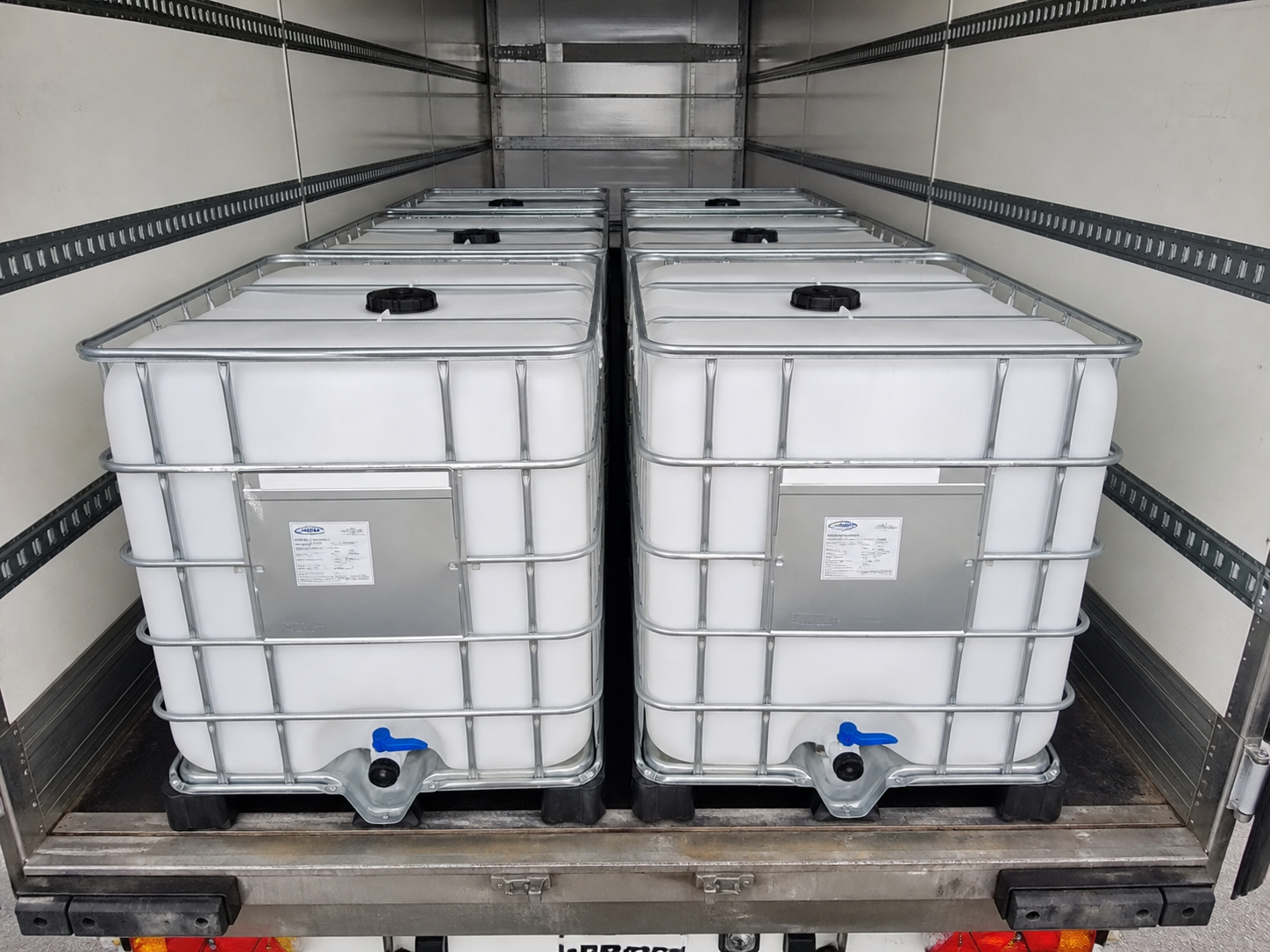
Why an IBC Tote Is Ideal for Bulk Water
A single IBC tote holds 275 to 330 gallons in a compact, forkliftable, stackable package. That makes it one of the most practical containers for storing water at a home, farm, worksite, or community shelter. One tote is roughly the equivalent of five standard drums in a single footprint.
Reusing a tote for water is also a textbook example of giving an industrial container a valuable second life instead of scrapping it. But water storage, especially drinking water, comes with real safety rules. Getting the grade, treatment, rotation, and siting right is what separates a safe reserve from a liability.
This guide walks through those decisions so your stored water stays usable when you actually need it.
Potable Versus Non-Potable: Pick the Right Grade
The single most important decision is whether you need drinking water. For potable use, you must start with a food-grade tote whose only prior contents were food-safe, made from food-grade polyethylene, and ideally certified for potable contact. A tote that previously held any non-food chemical should never be used for drinking water, no matter how well it was rinsed.
For non-potable purposes such as irrigation, livestock washing, firefighting reserve, or toilet flushing, a sound general-purpose tote is fine, provided it did not hold anything toxic. Label your totes clearly by intended use so the wrong container never ends up as a drinking supply.
- Potable: certified food-grade tote, food-only prior contents
- Non-potable: any sound tote free of toxic prior contents
- Never use a chemical tote for drinking water
- Confirm the bottle is food-grade polyethylene, not just clean
- Label each tote with its permitted use
Clean and Sanitize Before Filling
Even a food-grade tote needs a proper cleaning before it holds water you intend to store. Rinse thoroughly, then sanitize the interior with an unscented chlorine bleach solution, swirl it to coat all surfaces including the top and valve, let it dwell, and rinse until no bleach smell remains.
Do the same for the discharge valve, since that dead space traps residue and grows biofilm if ignored. A tote that has never held anything but potable water can skip heavy sanitizing, but a reconditioned unit should always be sanitized before its first fill for drinking water.
Treat the Water You Store
Water does not spoil on its own, but it can grow algae and bacteria, especially if any light reaches it. If you fill from a treated municipal supply, the residual disinfectant helps for a while but fades over time. For long-term potable storage, add an appropriate amount of unscented chlorine bleach or a commercial water preservative rated for drinking water and follow the product dosing exactly.
Keep the tote sealed at the cap and valve to keep out insects, dust, and light. For non-potable water you can be more relaxed, but even irrigation water benefits from staying covered to limit algae that clogs pumps and emitters.
Rotate on a Schedule
Stored water is only useful if it is still good when you need it. Set a rotation schedule and stick to it. A common practice is to empty, re-sanitize, and refill potable storage roughly twice a year, or per the guidance of your preservative product. Non-potable water can be rotated less often but should still be refreshed to prevent stagnation.
Tie rotation to easy calendar anchors so it actually happens, and use the drained water productively rather than dumping it. Emergency supplies that are checked and cycled are the ones that work in a crisis.
- Mark the fill date on every tote
- Re-sanitize and refill potable water about twice a year
- Use drained water for irrigation instead of wasting it
- Inspect cap and valve seals at each rotation
- Keep a simple log so no tote is forgotten
Site the Tote Safely
Where you place the tote matters as much as what is in it. Water is heavy: a full IBC weighs well over a ton, so it must sit on a level, solid surface such as a concrete slab or a properly rated rack. An uneven or soft base can let the pallet crack or the tote tip.
Keep totes out of direct sunlight. Ultraviolet light both degrades the plastic over time and fuels algae growth inside. Store in a shaded space, a garage, or under an opaque cover. Protect from freezing as well, since a solid block of ice can split a full bottle. If you stack totes, only stack empty or lightly filled units unless the design is rated for stacking when full.
Build a Reliable Water Reserve
IBC totes turn bulk water storage from a hassle into a simple, cost-effective project, and repurposing a used tote for the job keeps a durable container in service instead of the scrap pile. The recipe is straightforward: right grade, clean and sanitize, treat, rotate, and site out of the sun on solid ground.
If you need certified food-grade totes for drinking water or sound general-purpose units for irrigation and reserve supply, IBC Tote Solutions can supply the right grade and explain exactly what a given tote last held. Reach us through the quote form or email info@ibctotessolutions.com and we will help you set up water storage you can trust.