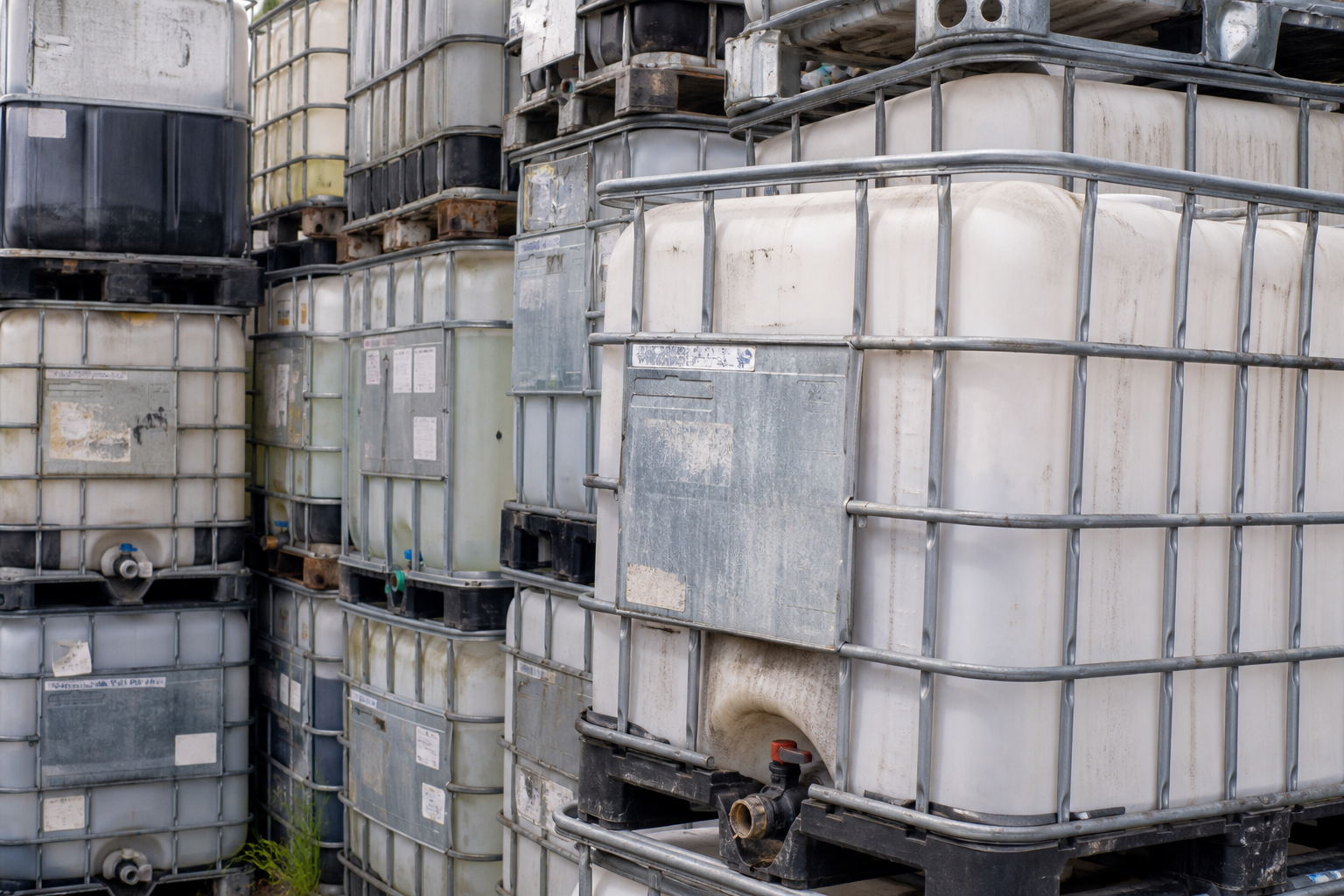
The Farm's Most Versatile Container
Ask any grower who has one and they will tell you the IBC tote earns its keep several times over. A single container holds enough liquid to matter, moves with equipment the farm already owns, and costs little when bought reconditioned. That combination makes it the default choice for dozens of jobs that used to require purpose-built tanks.
The appeal is amplified on a farm because reuse is already part of the culture. Buying a reconditioned tote instead of a new molded tank keeps a durable container working, saves real money at a time when input costs are high, and fits the resourceful, waste-nothing ethic that runs through agriculture.
Irrigation and Water Storage
The most common farm use is simply storing and delivering water. A tote positioned above a field can gravity-feed drip lines, while a tote on a stand or a trailer becomes a mobile water source for remote plots, greenhouses or new plantings far from a hydrant. Rainwater harvesting is another natural fit; a tote catches roof runoff for later irrigation.
For irrigation, the standard 275 or 330 gallon capacity is enough to water a substantial planting between refills, and the translucent bottle lets you read the level at a glance. Fit a valve adapter to connect garden hose or drip tubing, and shade the tote to slow algae growth in clear water.
Liquid Feed and Fertilizer Storage
Liquid fertilizers, fish emulsion, molasses supplements and other agricultural liquids store well in totes, and the built-in valve makes measured dispensing easy. Buying inputs in bulk totes rather than small jugs cuts cost per gallon and slashes small-container waste.
Chemical compatibility is the thing to check. The HDPE bottle handles most agricultural liquids, but confirm before storing anything aggressive.
- Confirm the fertilizer or additive is compatible with HDPE before filling.
- Choose a tote whose prior contents will not contaminate your input; ask for the history.
- Label every tote clearly with contents and date to avoid dangerous mix-ups.
- Keep totes out of direct sun where possible, since UV and heat degrade some products.
Brewing Compost Tea
Compost tea, an aerated brew of compost steeped in water, has become a staple of regenerative and organic operations, and the IBC tote is the ideal brewing vessel. Its large volume lets you make enough tea to treat real acreage in a single batch, and the open-topped versions or a cut top make loading compost and cleaning simple.
Add an aquarium-style or commercial air pump with diffusers to keep the brew oxygenated, suspend the compost in a mesh bag, and brew for roughly a day. The valve at the bottom lets you draw off finished tea straight into a sprayer. Because tea residue can clog things, choose a tote that is easy to open and rinse between batches.
Livestock Watering
For pasture and barn watering, a tote is a large, movable reservoir that refills automatically feeders and troughs or feeds a float-valve waterer. One tote can supply a paddock for days, cutting the number of trips to fill smaller troughs. On a trailer or skid, it follows rotational grazing around the property.
Because the water is for animals, hygiene matters. Use a tote that only held food-safe or clearly benign contents, keep it clean, and shade it to limit algae and keep the water cool. Fit a livestock float valve or a low-flow trough connection so animals always have fresh water without overflow.
Sprayer Fill Stations and Nurse Tanks
Filling a field sprayer from a small hose wastes time; filling from an elevated tote is fast. A tote mounted on a stand becomes a gravity or pump-fed nurse tank that tops off a sprayer or applicator in minutes. Many operations keep one tote for clean water rinse and another for premixed product so refills are quick and consistent.
Keep spray-chemical totes strictly separate from any tote used for water, feed or livestock, and never cross them, even after rinsing. Dedicate and label each tote to one role. A tote that has held herbicide should never later hold irrigation water for sensitive crops.
Choosing and Sizing Totes for the Farm
Match the tote grade to the job. Livestock water, liquid feed and irrigation of edible crops call for food-safe totes with a known clean history, while ballast, construction water or equipment rinse can use lower grades at lower cost. Think about how you will move it, since a full tote weighs well over a ton and needs a forklift or a rated pallet jack.
Buying several reconditioned totes and dedicating each to a single role, one for water, one for feed, one for tea, one for spray, keeps everything clean, safe and organized while still costing far less than new tanks.
Get the Right Totes for Your Operation
Whether you need food-safe totes for livestock and feed or budget totes for water storage, we can supply the right grade in the quantity your farm needs and help you sort out compatibility and history.
Send your requirements through our quote form or email info@ibctotessolutions.com, and we will help you outfit your operation affordably and sustainably.