Where totes fit in a beverage operation
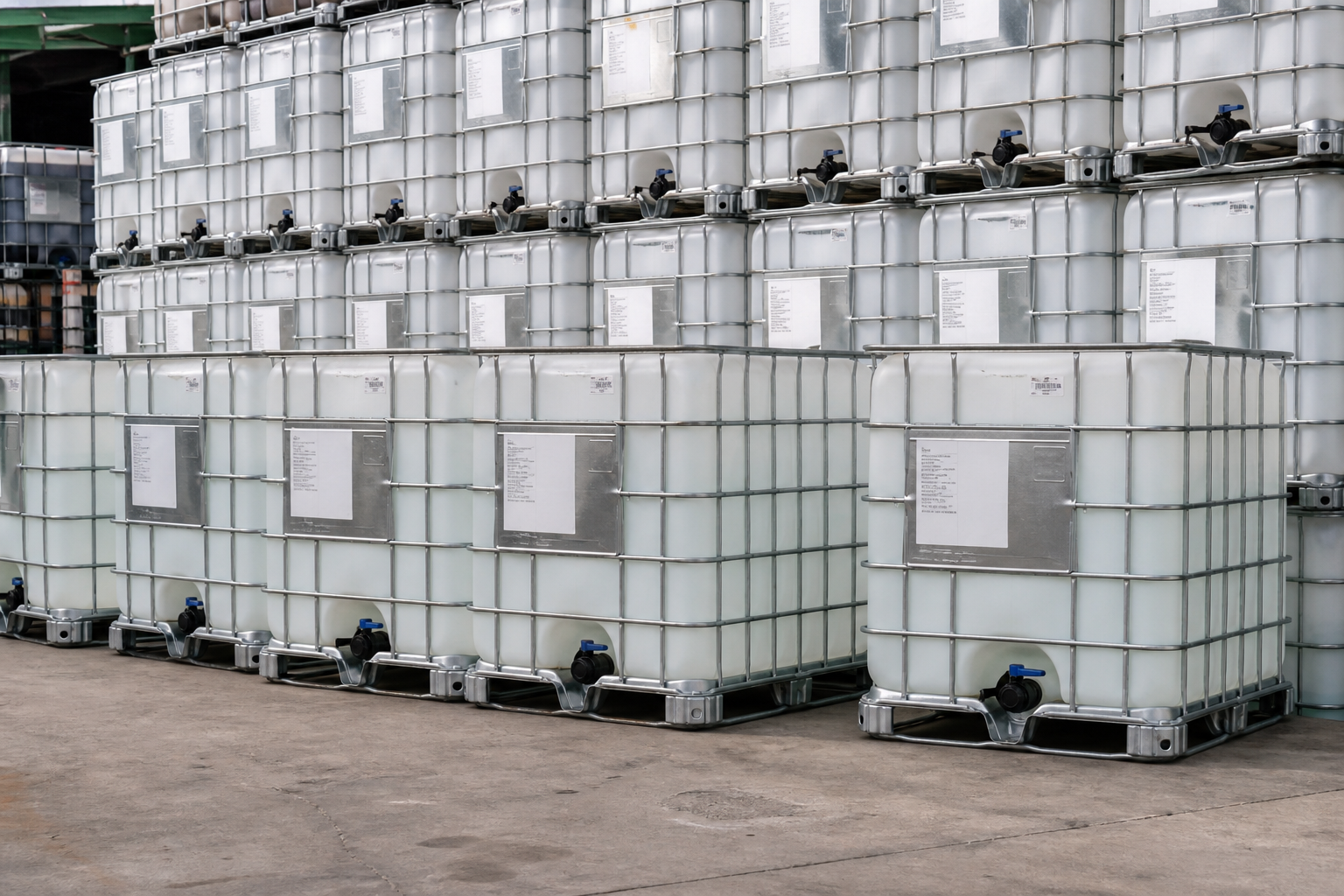
A 275 or 330 gallon IBC tote is a natural fit for the scale gap between drums and fixed tanks. Breweries, cideries, cold-brew coffee makers and other beverage producers use totes to hold brewing and dilution water, to move wort or juice between steps, to store bulk sweeteners and adjuncts, and to mix and hold cleaning chemistry.
The compact 40 by 48 inch footprint fits standard pallet racking and doorways, the totes stack when empty, and a forklift or pallet jack moves a full one easily. For a growing producer, totes add flexible bulk capacity without the cost and permanence of installing more fixed vessels.
Food-grade is non-negotiable
Anything that touches product must come from a food-grade tote. That means an HDPE bottle that previously held a food-safe substance and has been cleaned to sanitation standards, not a general industrial container. Using a tote with an unknown or non-food history risks contaminating a batch and your brand, and no cost saving is worth that.
When sourcing, insist on knowing the prior contents and the cleaning process. A tote that held food-grade syrup and was properly reconditioned is exactly what you want; one that held an industrial chemical is not, regardless of how clean it looks.
Cleaning and sanitation before every use
A food-grade tote from a reputable reconditioner arrives clean, but your operation still owns the final sanitation. Treat a tote like any other product-contact vessel: run your standard clean-in-place or manual cleaning and sanitizing routine before it touches anything you will sell.
Pay special attention to the parts that hide residue. The valve, the gasket and the threaded fittings are where old product and biofilm hide, so clean and sanitize them thoroughly, and inspect gaskets for wear. Between uses, drain the tote fully and let it dry to discourage microbial growth.
- Verify the tote is food-grade with known prior contents
- Run a full clean and sanitize cycle before product contact
- Give extra attention to valve, gasket and threaded fittings
- Inspect and replace worn gaskets that can trap residue
- Drain and dry totes fully between uses to prevent growth
The CO2 question
Fermentation and carbonated products bring carbon dioxide into the picture, and CO2 deserves real respect. A standard IBC tote is not a pressure vessel, so it must never be used to hold liquid under carbonation pressure or as a sealed fermenter that could build gas pressure. The bottle is designed for atmospheric bulk storage, not for containing pressurized gas.
CO2 is also heavier than air and can accumulate in low or enclosed spaces, displacing oxygen. Any area where you handle fermenting product or dispense CO2 needs proper ventilation and monitoring for worker safety. Use totes for the jobs they are built for and leave pressure and carbonation to purpose-built pressure-rated equipment.
Batching and blending with totes
Totes shine in the measuring and blending steps of a recipe. Their large, consistent volume makes them ideal for staging brewing water, preparing dilution water to hit a target gravity, or pre-blending ingredients before they go to the kettle or tank. Because a full tote is a known quantity, they help standardize batches from one brew day to the next.
Standard NPT valve threads let you fit the pumps, hoses and quick-connects your process uses, so a tote drops into an existing transfer setup without custom hardware. Many producers keep a few dedicated totes for water, a few for cleaning chemistry, and clearly label each so they never cross paths.
Cleaning chemistry and utility uses
Not every tote in a brewery touches product, and that is fine. Totes are excellent for mixing and holding caustic and acid cleaning solutions, sanitizer batches and wastewater, keeping those functions organized and off the floor. Dedicate specific totes to these roles and label them unmistakably so a cleaning tote is never mistaken for a product tote.
For aggressive cleaning chemistry, confirm the HDPE bottle and gaskets are compatible with the concentration you are using. Keeping product totes and chemical totes strictly separated is one of the simplest ways to protect quality and safety.
Reuse keeps costs and footprint down
Craft producers run on tight margins, and reconditioned food-grade totes cost far less than new ones while doing the same job. Reusing containers also fits the sustainability values that so many beverage brands are built on and that customers increasingly expect.
When a tote finally reaches the end of its useful life, its HDPE and steel are recyclable, so the material keeps working. Buying reconditioned and recycling at end of life is a clean, circular story you can share with your customers.
Source food-grade totes with confidence
The right totes let you scale bulk liquid handling affordably without compromising the safety of what goes into the glass. Starting with verified food-grade, leak-tested containers makes your sanitation program far easier to run.
Contact IBC Tote Solutions through our quote form or at info@ibctotessolutions.com. We can supply food-grade reconditioned totes with known histories, the valves and fittings your process needs, and guidance on matching containers to your workflow.