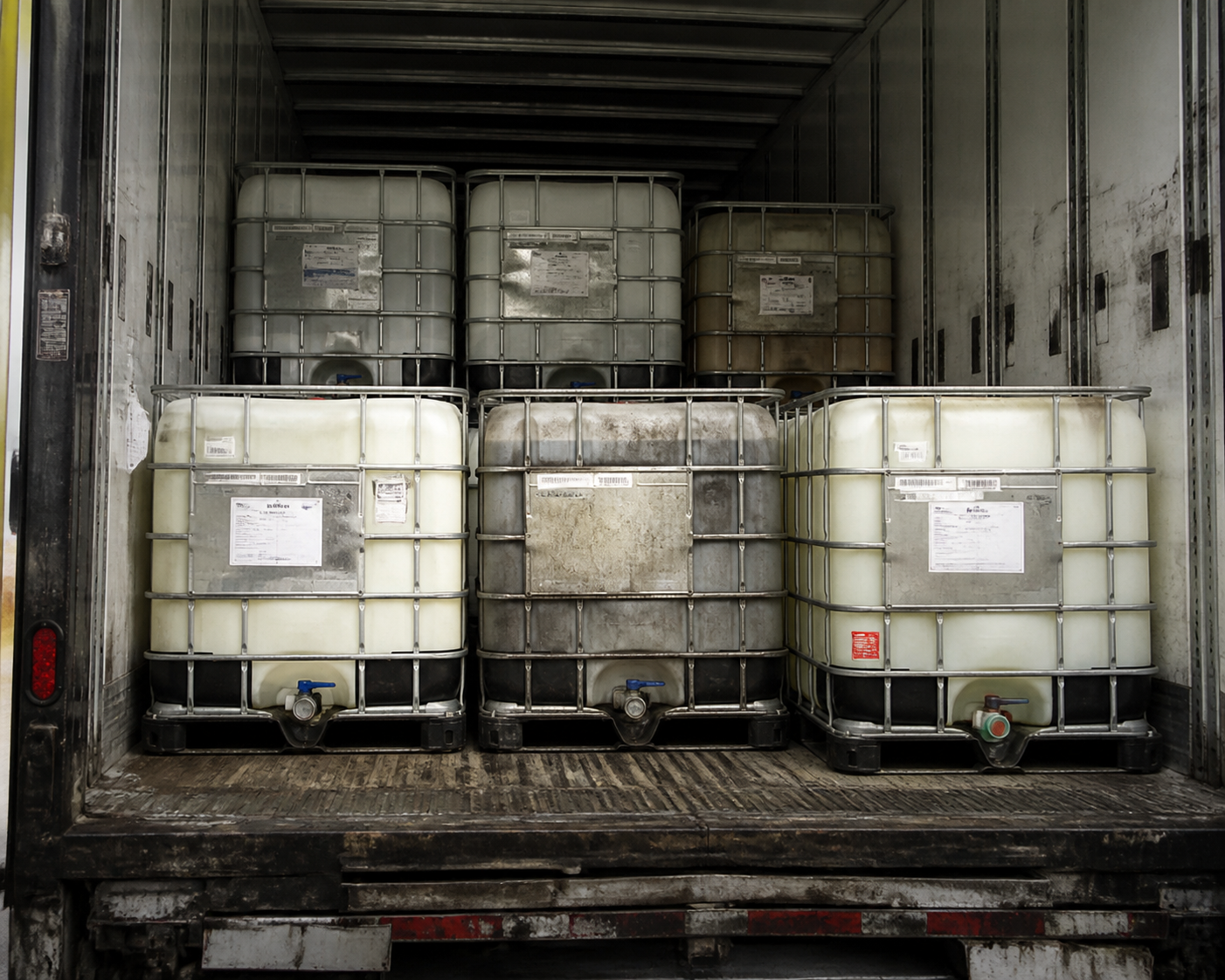
Why Operations Store Fuel and DEF in Totes
Fleets, farms, construction sites and generators all need fuel and diesel exhaust fluid on hand, and the IBC tote is a convenient middle ground between small drums and a large bulk tank. A tote holds enough diesel or DEF to run equipment for a meaningful stretch, moves with a forklift, and dispenses through its own valve. Buying in tote quantities also lowers cost per gallon versus jugs and drums.
Reusing a reconditioned tote for these duties, where appropriate, is cheaper and greener than a new tank, but fuel and especially DEF impose specific requirements that make container selection more than a formality. Getting the tote right the first time avoids ruined product and safety problems down the line.
Diesel Storage: Compatibility and Practice
Diesel is relatively forgiving. The HDPE bottle in a standard IBC tote is compatible with diesel fuel, so a clean, reconditioned tote works well for off-road and equipment fueling. The main enemies of stored diesel are water, contamination and microbial growth, the so-called diesel bug that thrives at the fuel-water interface and clogs filters.
Sound practice keeps diesel clean and dry. Beyond compatibility, remember that diesel is a combustible liquid, so handle it with the same care you would any fuel, away from ignition sources.
- Keep the tote sealed and shaded to limit condensation and slow fuel degradation.
- Consider a biocide and a fuel stabilizer if the diesel will sit for months.
- Filter diesel on dispensing to catch water and particulates before they reach equipment.
- Use a tote with a clean, compatible history and dedicate it to fuel.
DEF Is Different: Purity Is Everything
Diesel exhaust fluid is a precise 32.5 percent solution of urea in ultra-pure deionized water, used in the SCR systems that cut diesel emissions. DEF looks like water but it is chemically fussy and extraordinarily sensitive to contamination. Even trace amounts of fuel, oil, dust, metals or the wrong chemical can put DEF out of specification and damage a vehicle's expensive SCR components.
That sensitivity drives the golden rule: a DEF tote must be dedicated, clean and never previously used for anything incompatible. DEF is also mildly corrosive to some metals, so it needs approved materials throughout the storage and dispensing path. Never dispense DEF through equipment that has touched fuel or oil.
Choosing a Tote for DEF
Because DEF purity is non-negotiable, container selection is stricter than for diesel. A standard HDPE bottle is compatible with the DEF fluid itself, but the tote's history and its fittings matter enormously. A tote that carried oil, fuel, fertilizer or an unknown product should never be repurposed for DEF, even after washing.
The safest choice is a tote dedicated to DEF from the start, with DEF-compatible fittings and gaskets.
- Use a clean tote with a verified, DEF-safe history, ideally one dedicated to DEF only.
- Ensure valves, gaskets and any dispensing hardware are DEF-compatible and free of fuel or oil residue.
- Keep the tote sealed to block airborne dust and contamination.
- Never share pumps, funnels or hoses between DEF and fuel or other fluids.
Dispensing Diesel and DEF
For diesel, a pump fitted to the tote valve with an inline filter gives clean, controlled fueling, and a metered nozzle helps track usage. Keep the dispensing point tidy and catch drips, since spilled fuel is both a slip and an environmental hazard.
DEF dispensing must stay closed and clean. Use a dedicated DEF pump and nozzle, keep the system sealed against dust, and avoid any funnel or container that has seen other fluids. Cross-contamination on the dispensing side is one of the most common ways good DEF gets ruined between the tote and the tank.
Regulations and Environmental Controls
Fuel storage is regulated, and the rules scale with quantity and location. Depending on volume and whether the tote is indoors, outdoors or near water, you may need secondary containment, such as a spill pallet or a bunded area, to catch a leak before it reaches soil or drains. Fire codes and local regulations govern how much fuel you can keep and where.
DEF is not a fuel and is far less hazardous environmentally, but it should still be kept out of storm drains and waterways. For both products, check federal, state and local requirements, provide appropriate secondary containment for fuels, keep material safety information on site, and label every tote clearly with its contents.
Cold Weather Considerations
Winter changes the game for both products. Diesel can gel as paraffin wax drops out of solution in the cold, clouding the fuel and clogging filters and lines. Winterized diesel blends and additives lower the cloud and pour points, and keeping the tote sheltered helps.
DEF freezes at about minus 11 degrees Celsius, or roughly 12 degrees Fahrenheit. Freezing does not ruin DEF; it expands and then returns to spec when thawed slowly, so leave headspace in the tote and never add anti-gel chemicals, which would contaminate it. In hard winters, store DEF where it stays above freezing or plan for thaw time before use.
Get the Right Tote for Fuel or DEF
Matching the tote to diesel or DEF, with the right history, fittings and grade, is where we can help, especially for DEF where a clean, dedicated container is essential to protect your product and your equipment.
Tell us what you plan to store through our quote form or email info@ibctotessolutions.com, and we will supply a tote suited to the job, cost-effectively and with reuse in mind.