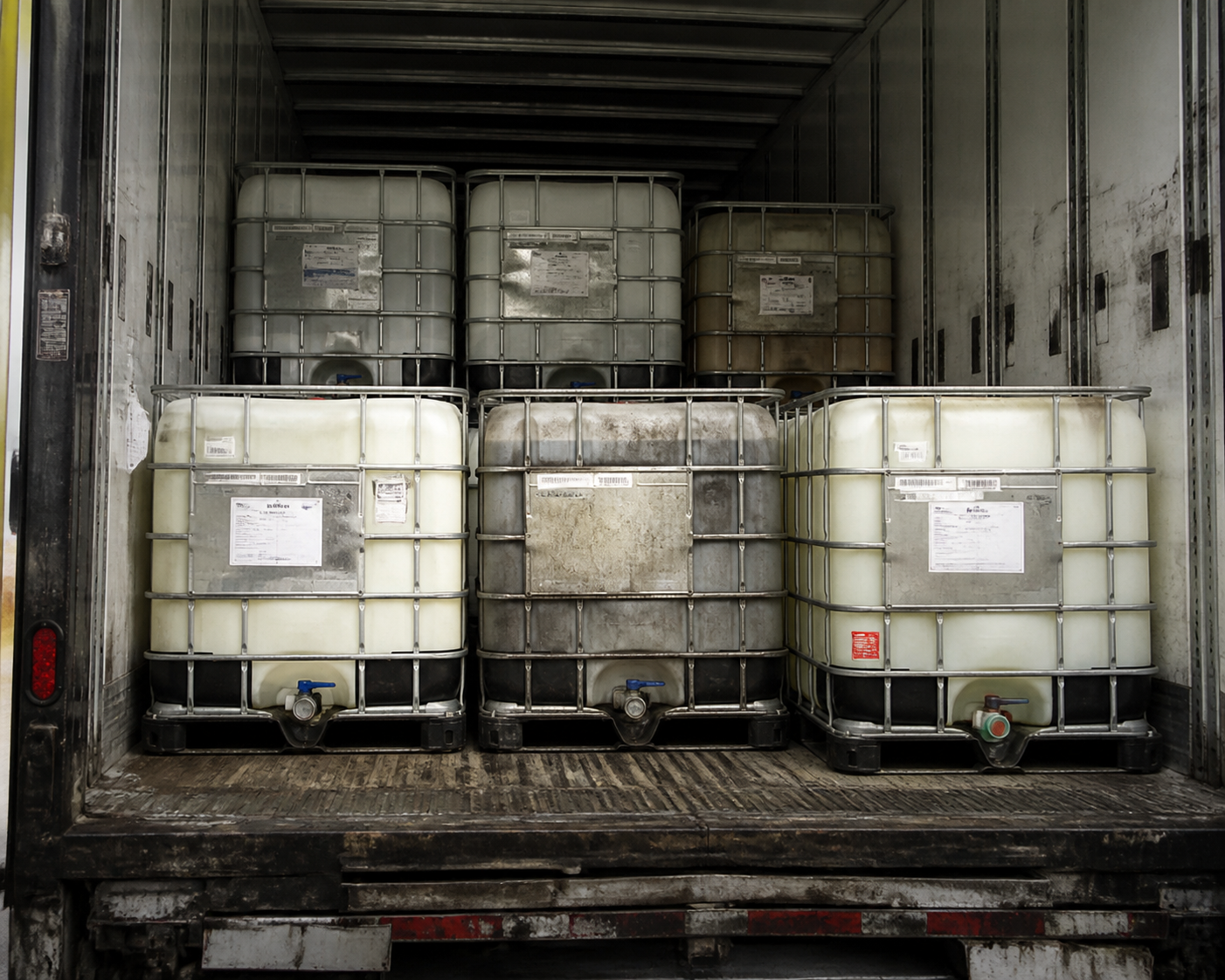
The Outlet Everything Connects To
The discharge valve at the bottom of an IBC is the hub of your entire transfer setup, and understanding it is the key to connecting pumps, hoses and downstream equipment without leaks or frustration. Most totes present a 2 inch nominal outlet, and it is the industry norm, but the thread on that outlet is the detail that trips people up most often.
The valve outlet commonly uses a coarse buttress or S60x6 style thread rather than the tapered NPT pipe thread that most plumbing and hose hardware expects. This is why you cannot simply screw a standard NPT fitting onto a bare tote outlet and expect a seal. The near-universal solution is an adapter that presents the coarse tote thread on one side and a standard connection on the other.
Understanding NPT and Why Adapters Matter
NPT, National Pipe Thread, is the tapered thread standard behind most US plumbing and industrial fittings. It seals as the tapered threads wedge together, usually with thread sealant or tape. Because the tote outlet thread is coarse and straight rather than tapered NPT, a direct match is the exception, not the rule.
An IBC adapter bridges the gap. A typical adapter threads onto the coarse 2 inch tote outlet and terminates in a 2 inch male NPT, from which you can branch to whatever your process needs. Once you have NPT at the tote, the entire universe of standard pipe and hose fittings opens up, which is exactly why adapters are the first accessory most tote owners buy.
The Common Adapter Terminations
Adapters come with a range of output connections so you can plug into almost any equipment. The right one depends on your hose, pump and how often you connect and disconnect.
Quick-connect camlock fittings are ideal for frequent hookups because they attach in seconds with a lever cam. Garden hose thread adapters let you run an ordinary garden hose for water and light non-hazardous fluids. Barbed fittings suit clamped flexible hose, and threaded NPT terminations connect directly to rigid pipe or pumps. Pick the termination that matches the equipment you already own to avoid a stack of secondary adapters.
- 2 inch male NPT: the universal bridge to standard pipe fittings
- Camlock, types A through F: fast lever-cam connect and disconnect
- Garden hose thread: for water and light non-hazardous liquids
- Barbed: for clamped flexible hose runs
- Reducing adapters: step 2 inch down to 3/4 or 1 inch as needed
Butterfly Valve vs Ball Valve
Most totes ship with an integrated valve, and the two common styles are butterfly and ball. A butterfly valve uses a disc that rotates within the flow path and is the most common factory valve on IBCs. It is compact, low cost, and gives good flow, though the disc sits in the stream and can catch on very viscous or particle-laden products.
A ball valve uses a bored sphere that rotates to open a clear, full-bore passage. When open, nothing obstructs the flow, which makes ball valves excellent for viscous fluids, slurries and applications where you want minimal restriction and reliable positive shutoff. Ball valves tend to cost a little more but are prized for durability and a clean bore. For water and thin liquids either works well, so let your product viscosity and shutoff needs guide the choice.
Gaskets and Chemical Compatibility
A fitting is only as good as its seal, and the gasket or O-ring material must be compatible with your product or it will swell, harden, crack or leak. This is where many otherwise correct setups fail. Different elastomers resist different chemistries, so match the material to the liquid before you assume a connection is sound.
EPDM handles water and many water-based products well but is poor with oils and fuels. Viton, a fluoroelastomer, resists a wide range of aggressive chemicals, solvents and fuels but costs more. Buna-N, or nitrile, is a solid general-purpose choice for oils and fuels but not for many polar solvents. When in doubt, consult a chemical compatibility chart for both the gasket and the valve seat before trusting a connection with anything hazardous.
- EPDM: good for water and water-based fluids, poor for oils and fuels
- Viton (FKM): broad chemical and solvent resistance, higher cost
- Buna-N (nitrile): good for oils and fuels, weak with many solvents
- Always verify both the gasket and the valve seat against your product
Keeping Valves in Service
A worn or wrong valve is a leak and a lost product waiting to happen, but valves and gaskets are replaceable, which is part of what makes reused totes so practical. During reconditioning, a tired valve or perished gasket is swapped for a sound one, restoring a leak-free discharge without scrapping the whole container.
Replacing a valve and gasket to keep a tote working is a small, cheap, and low-waste repair compared with buying new. It is the same circular logic that runs through everything about IBCs: fix and reuse the durable parts, and only replace what is worn.
Get the Right Fittings the First Time
Sorting out tote threads, adapters, valve styles and gasket compatibility is a lot to juggle, and the wrong combination means leaks or a trip back to the supplier. Tell us your product, your equipment and how you plan to connect, and we will help you spec a leak-free setup. Reach us through the quote form or at info@ibctotessolutions.com.