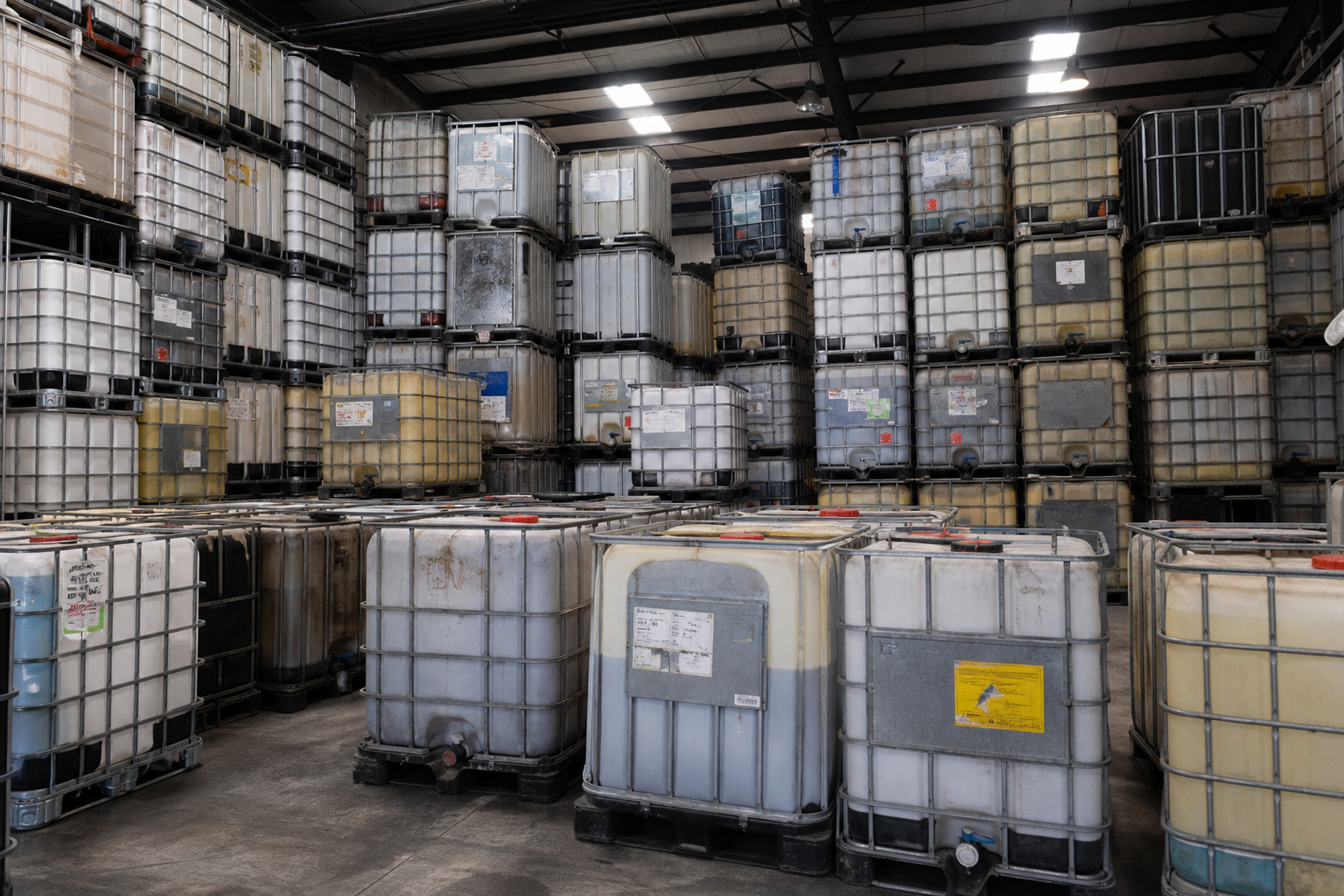
Reuse First, Recycle Last
The greenest thing that can happen to an IBC tote is that it keeps being an IBC tote. Reuse and reconditioning always beat recycling because they preserve the energy and material already invested in the container. A tote that is cleaned, repaired and put back into service delivers years more useful life without any new manufacturing.
But nothing lasts forever. Eventually a bottle cracks, a cage corrodes beyond repair, or a container fails inspection for good. At that point recycling steps in as the responsible final stop, and the good news is that an IBC is largely made of two highly recyclable materials. Understanding what happens at end-of-life shows just how much of a tote can be recovered rather than buried.
The Anatomy of a Tote at End-of-Life
To understand recycling, it helps to see the tote as a set of separable materials rather than one object. The bulk of the container breaks down into a handful of distinct, recoverable streams.
The inner bottle is high-density polyethylene, HDPE, one of the most widely recycled plastics in the world. The outer cage is galvanized steel, and steel is the most recycled material on earth by weight. The pallet base may be steel, wood or composite, and the valve and fittings add a small amount of plastic and metal. Separating these streams is the first step in diverting the whole unit from landfill.
- Inner bottle: HDPE, roughly 40 to 60 pounds of recyclable plastic
- Cage: galvanized steel, highly recyclable structural metal
- Pallet: steel, wood or composite depending on the model
- Valve and fittings: mixed plastic and metal, recovered where possible
How HDPE Bottles Are Recycled
Once separated from the cage, an HDPE bottle destined for recycling is first cleaned to remove any residue, then shredded or granulated into small flakes. Those flakes are washed again, dried, and typically melted and pelletized into recycled HDPE resin.
That recycled resin becomes feedstock for new products. HDPE is prized by recyclers because it retains good properties through reprocessing and has strong end markets, including plastic lumber, pipe, drainage products, containers and industrial components. A single tote bottle represents dozens of pounds of a genuinely circular plastic, provided it is clean and properly sorted.
Steel Cages and Metal Recovery
The galvanized steel cage is the easiest part of the whole equation. Steel is infinitely recyclable without loss of quality and is recovered at very high rates. A retired cage is sent to a metal recycler, where it is sheared or baled and melted in an electric arc or basic oxygen furnace to become new steel.
Recycling steel uses dramatically less energy than producing steel from virgin ore and avoids the associated mining and processing. Because scrap steel has real market value, cages are almost always recovered rather than discarded, which is a big part of why an IBC can approach a zero-to-landfill outcome. Even the zinc from galvanizing is managed within established steel recycling processes.
The Path to Zero-to-Landfill
Zero-to-landfill is not a slogan, it is an achievable outcome when a tote is dismantled and sorted properly. The steel goes to metal recycling, the HDPE goes to plastic recycling, the pallet is recycled or reused by material type, and even mixed valve components can be broken down for recovery.
The difference between a tote in a landfill and a tote fully recycled comes down to handling. A container tossed whole into a dumpster loses everything, while the same container routed to a processor that separates and directs each material can be almost entirely reclaimed. Choosing the right end-of-life path is the final act of good stewardship for a container that has already served hard.
Why This Matters for Buyers Too
End-of-life recycling completes the circular story that begins with buying reused. When you purchase a reconditioned tote, you extend a container life and delay this final stage. When that tote eventually does retire, recycling recovers its materials for the next generation of products. Together, reuse and recycling mean an IBC can spend almost none of its existence as waste.
This full-lifecycle view is why bulk liquid handling with IBCs can be one of the more sustainable packaging choices available, far better than single-trip or disposable options. Every reuse and every recovered pound is a measurable environmental win as well as a cost saving.
Retiring a Tote Responsibly? We Can Help
If you have totes that are past their useful life, the worst thing you can do is send them to landfill. We buy, recondition and recycle used IBCs, so damaged or worn units can be diverted, repaired where possible, and fully recycled when not. To move retired totes on responsibly, reach out through the quote form or email info@ibctotessolutions.com.