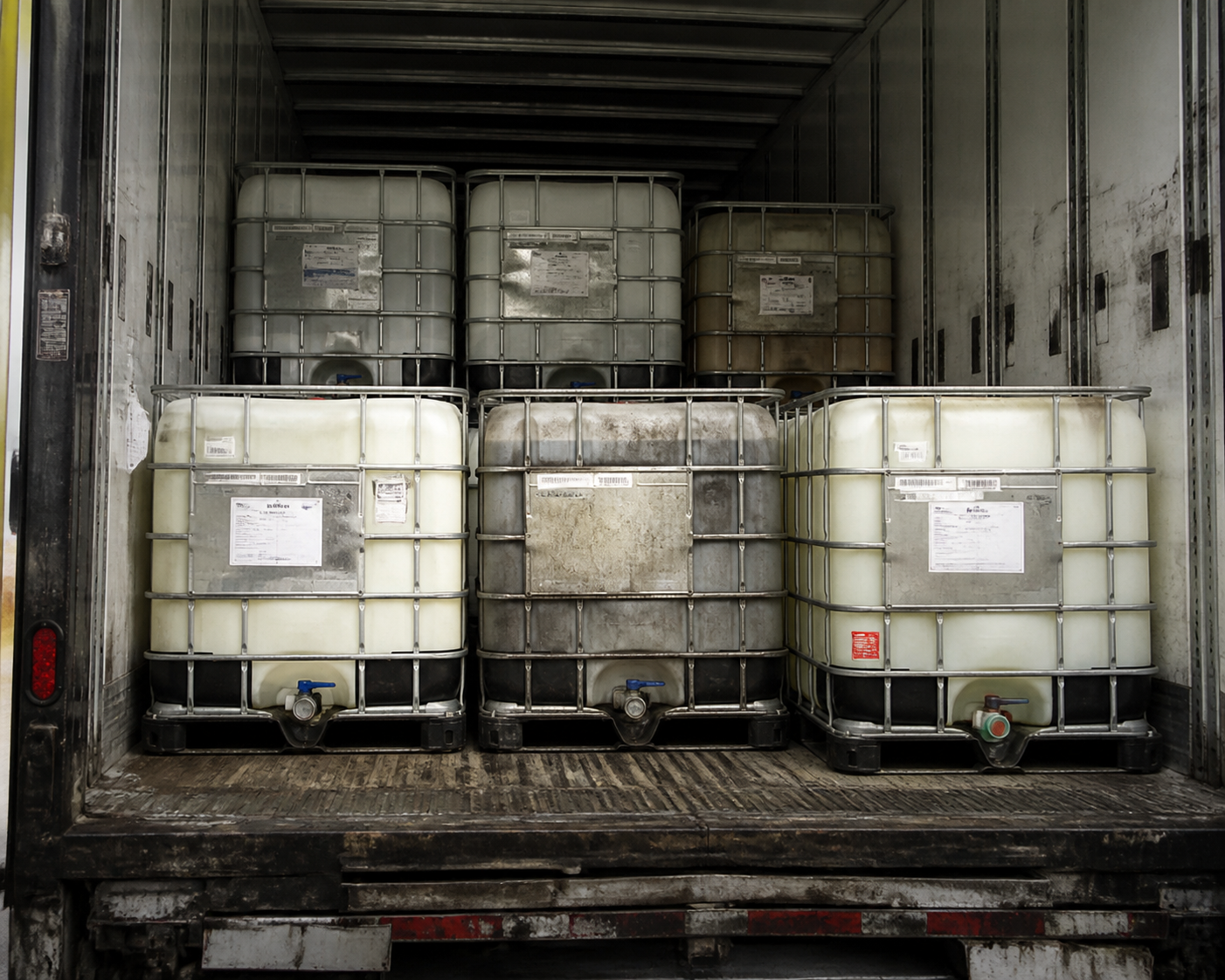
Why used IBC totes still hold real value
A standard 275 or 330 gallon intermediate bulk container is a rugged, reusable asset. The HDPE bottle, the galvanized steel cage, the pallet base and the discharge valve all have resale value long after the first product is emptied. Buyers like IBC Tote Solutions purchase used totes precisely because reconditioning a sound bottle costs far less and uses far fewer resources than manufacturing a new one from virgin resin.
That means your empties are not waste. Even damaged units carry salvage value in the cage, valve and pallet. Understanding what drives price lets you capture more of that value instead of paying a hauler to take good containers away.
Drain, rinse and knock down residual product
The single biggest factor in what a buyer will pay is what is left inside. A tote that arrives with heavy residue, crystallized product or an unknown sludge is worth a fraction of a clean one, because the buyer inherits both the disposal cost and the liability.
Fully open the 2 inch NPT discharge valve and let the bottle drain completely, then tip or invert briefly to clear the sump. For water soluble products a triple rinse dramatically improves grade. Keep the original cap and valve in place so the container stays sealed and clean during storage.
- Drain through the bottom valve until flow stops, then clear the low corner sump.
- Triple rinse water soluble residues and let the interior dry before capping.
- Never mix incompatible rinse water, and follow local rules for wash water disposal.
- Leave the valve closed and the fill cap on to keep the interior clean and pest free.
Know and disclose the prior contents
Buyers grade totes partly on contents history. A container that only ever held food grade liquid, glycerin or a mild detergent commands more than one that held a solvent, a pesticide or an unknown chemical. Honest disclosure is not just ethical, it protects you from a rejected load and a return freight bill.
Photograph the original product label and keep any safety data sheet you have. If you have a mix of clean food grade totes and industrial ones, sort and price them separately rather than lumping everything into one lot.
Take photos that actually help the buyer quote
Most used tote transactions are quoted from photos before anyone drives out. Clear pictures let a buyer confirm grade and volume quickly, which means a faster and higher offer. Vague or dark photos invite a low, conservative bid to cover the unknowns.
Shoot in daylight, wipe the label window and capture the details that reveal condition and value.
- Wide shot of the whole lot so quantity is obvious.
- Cage close ups showing any dents, rust or broken welds.
- The bottle in raking light to reveal bulging, cracks or heavy staining.
- The valve, cap and any labels or manufacture date plate.
- The pallet base, noting whether it is plastic, composite or steel.
Volume, uniformity and palletizing
Quantity changes everything. Freight is the dominant cost in used tote logistics, so a buyer earns far better economics collecting twenty uniform totes in one stop than picking up two here and three there. If you can accumulate a truckload or partial truckload of similar units, you unlock the strongest pricing.
Uniformity matters too. A batch of the same footprint, roughly the standard 40 by 48 inch pallet base, all the same grade, is easy to load and resell. Mixed valve types, mismatched cages and odd sizes slow everything down and soften the offer.
Make pickup easy
The seller who removes friction gets the better number. If you have a loading dock or a forklift on site, say so, because that speeds loading and reduces the buyer's cost. Totes staged in a single accessible spot, on solid level ground, load far faster than ones scattered across a yard or buried behind other inventory.
Confirm your access details up front: dock height versus ground level, forklift availability, any gate hours or facility check in, and whether a full size trailer can reach the staging area. The clearer the logistics, the cleaner the quote.
Timing the market
Demand for reconditioned totes tends to rise through the warmer months when agriculture, landscaping and construction chemistry ramp up, and it can soften in deep winter. If your empties are not taking up needed space, holding for a stronger season can help, though clean indoor storage is the price of waiting.
Do not let totes degrade while you wait for a perfect price. UV exposure yellows and embrittles the HDPE, and standing water rusts the cage. A sound tote sold this month usually beats a sun baked one sold next year.
Turning empties into cash
Selling used IBC totes well is mostly about respect for the buyer's process: clean containers, honest disclosure, good photos, useful quantity and simple pickup. Do those things and you convert what many companies treat as a disposal headache into steady revenue while keeping durable containers in service instead of in a landfill.
IBC Tote Solutions in Berea, Ohio buys used and select new totes, arranges transport, and reconditions sound bottles back into service. Send photos and your location through our quote form or email info@ibctotessolutions.com and we will price your lot.