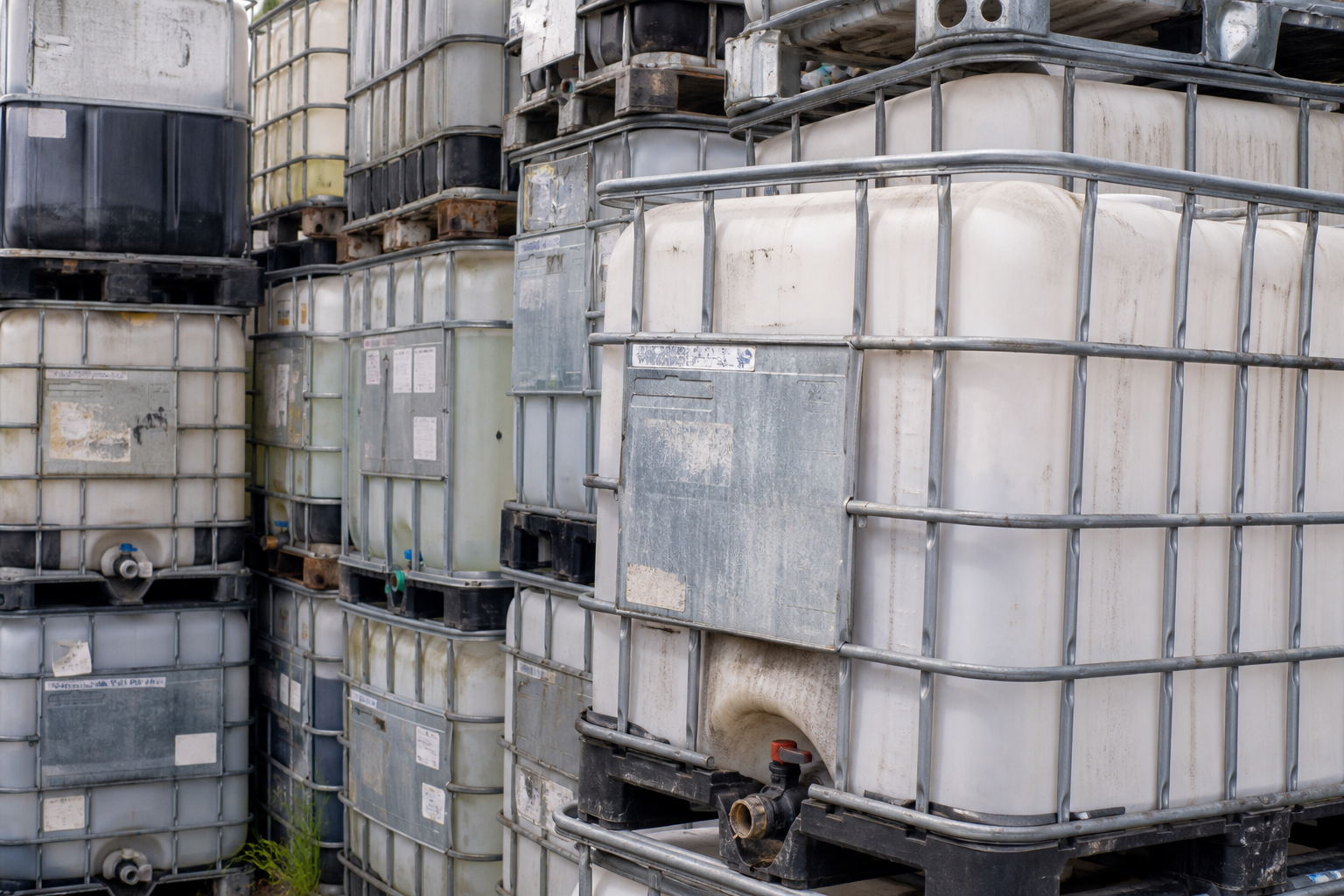
What a closed-loop tote program actually is
A closed loop program treats totes as circulating assets rather than disposable packaging. Filled totes go out to customers or between your own sites, empties are collected, cleaned, inspected, and refilled, and the same units cycle through again and again. The loop closes because containers return to the start instead of ending in a landfill or drifting away unaccounted for.
The payoff is both financial and environmental. Every completed loop is a container you did not have to buy new and packaging you did not have to dispose of. Designed well, a closed loop program lowers cost per shipment while shrinking your waste footprint, but it only delivers those gains if it is planned deliberately. This guide covers the building blocks.
Forecasting demand and sizing the fleet
The first design decision is how many totes you actually need in circulation, and getting this wrong is the most common failure mode. Too few totes stalls fills and shipments; too many ties up capital and warehouse space in idle units. The right number depends on your throughput and, critically, on how long a tote takes to complete a full loop.
That loop time, sometimes called cycle time, is the total from a tote leaving full to being available full again, including transit out, dwell at the customer, return transit, cleaning, and inspection. If you ship a certain number of totes per week and each takes a certain number of weeks to return and reset, your fleet must be large enough to cover every tote that is in transit or in process at once. Forecast demand realistically, then size the fleet to keep the pipeline full without excess.
Pooling: sharing a fleet efficiently
Pooling means managing a shared population of totes as a common resource rather than dedicating specific units to specific routes or customers. A pooled fleet flexes to demand: any clean, available tote can serve any fill, which raises utilization and reduces the total number of units you must own.
Pooling can run internally across your own sites or through a service partner who manages the shared fleet, cleaning, and repositioning on your behalf. Either way, the aim is high utilization, keeping each tote working rather than sitting. A pooled model also smooths the peaks and troughs of demand, because units freed up on one route become available for another instead of sitting idle waiting for their assigned job.
Scheduling pickups and returns
A loop only closes if empties actually come back, and reliable reverse logistics is where many programs quietly leak assets. Left to chance, empty totes accumulate at customer sites, get repurposed by well meaning staff, or vanish. A scheduled, predictable pickup rhythm is what keeps containers flowing home.
Design the return leg with as much care as the delivery leg.
- Set clear expectations with customers on how long they may hold a tote before return.
- Schedule regular pickups rather than waiting for ad hoc calls, so empties do not pile up.
- Combine outbound deliveries with return pickups on the same trip to cut freight cost.
- Make return simple for the customer, since friction is the main reason empties stall.
- Track which totes are out and overdue so you can act before they are lost.
The KPIs that keep a loop healthy
You cannot manage a loop you do not measure. A handful of key performance indicators tell you whether totes are cycling as designed or quietly draining out of the system, and reviewing them regularly catches problems while they are still cheap to fix.
Focus on the metrics that reveal flow and loss. Cycle time shows how fast totes complete a loop; a rising number means you will need more units to hold throughput. Return rate shows the percentage of dispatched totes that come back, and a falling rate signals leakage that must be traced. Utilization shows how many of your totes are actively working versus idle. Loss and shrinkage counts units that never return, which is direct capital walking out the door. Cost per cycle ties it all back to money and lets you prove the program's value.
Common pitfalls and how to avoid them
Most closed loop programs that struggle fail in predictable ways. The biggest is neglecting the return leg, treating reverse logistics as an afterthought until empties are scattered across dozens of sites. The second is misjudging fleet size, either starving the operation or drowning capital in surplus totes. The third is a lack of visibility, running the program blind without KPIs until losses have already mounted.
The countermeasures are straightforward once named. Build return logistics into the program from day one, size the fleet from real cycle time data and adjust as you learn, and put simple tracking in place so you always know where your totes are. A program that respects these three points tends to stabilize quickly and deliver steady savings.
Getting started without overbuilding
You do not need a perfect system before you begin. The practical path is to start with a defined scope, learn from real data, and expand what works. Pick one product line, one region, or a handful of high volume customers, run the loop there, and measure cycle time and return rate before scaling.
Begin with a fleet sized from your best forecast, establish a pickup schedule, and track the core KPIs from the first cycle. Early runs reveal your true loop time and return behavior, which lets you right size the fleet with confidence instead of guesswork. A phased start also builds the internal habits and customer expectations that a larger program depends on.
Partnering on your closed-loop program
A closed loop program benefits enormously from a partner who can supply reconditioned totes, clean and inspect returns, handle transport, and buy back surplus when your fleet shifts. That is exactly the reuse economy IBC Tote Solutions operates in from Berea, Ohio, across buying, selling, reconditioning, transporting, and recycling totes.
If you are designing or scaling a closed loop program, tell us your volumes, routes, and goals through our quote form or at info@ibctotessolutions.com, and we will help you build a loop that stays closed.