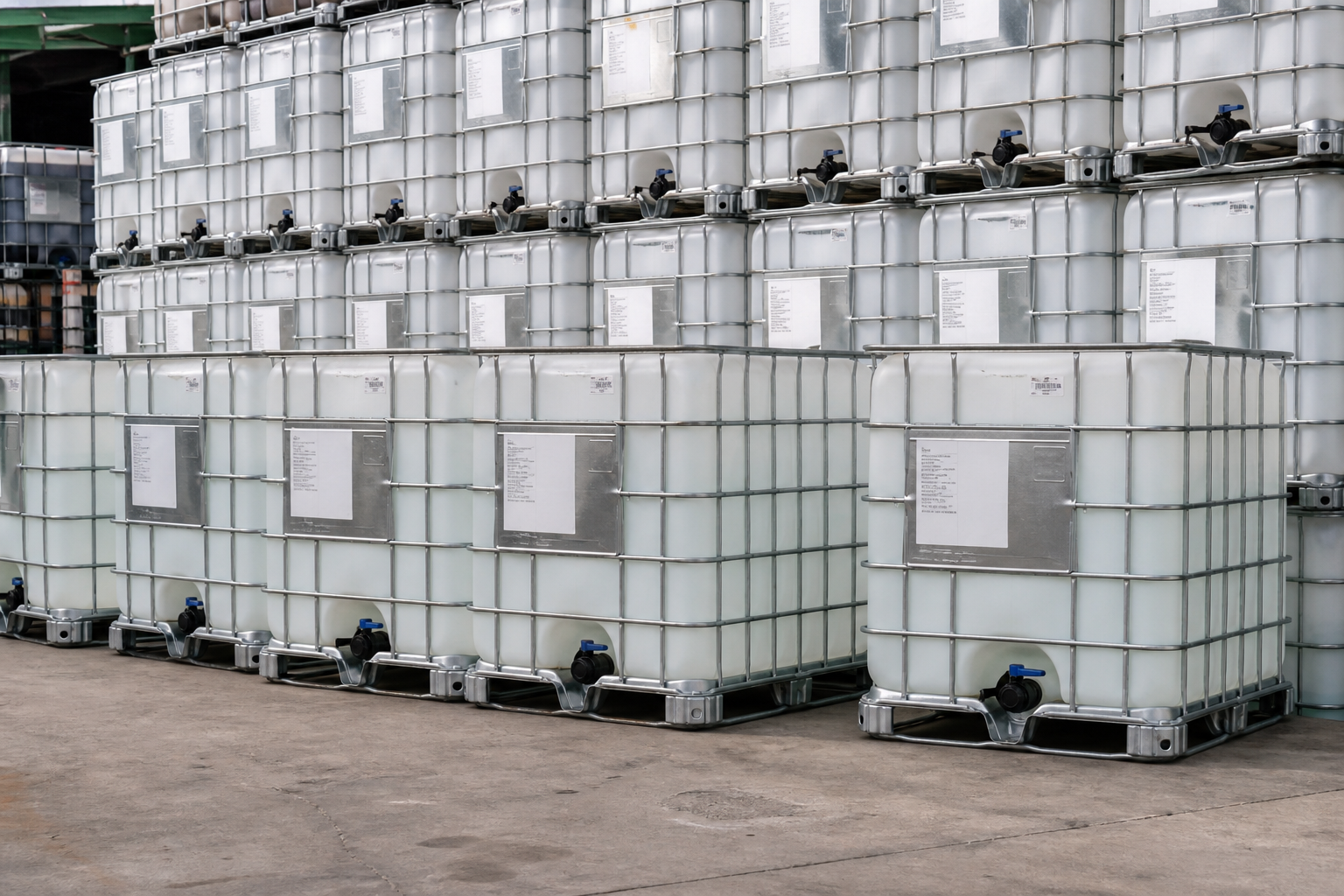
Same Plastic, Very Different Guarantees
One of the biggest misconceptions in the IBC world is that food-grade and industrial totes are made from fundamentally different materials. In most cases the bottle itself is the same high-density polyethylene, HDPE, molded to the same specifications. HDPE is inert, durable and widely accepted for food contact, which is why it appears in everything from milk jugs to bulk syrup totes.
So if the plastic is the same, what makes one food-grade and one industrial? The difference is not the raw material, it is the guarantees around it: what the tote has held, what its seals are made of, and whether you have documentation to prove the container is safe for edible products. Food-grade is a status backed by history and paperwork, not just a resin type.
Contents History Is Everything
The single most important factor is what the tote previously contained. A true food-grade used tote has only ever held food-safe products, things like sweeteners, juices, edible oils, flavorings, or food-safe additives. It has never carried a chemical, solvent, pesticide or other non-food substance that could leave a residue or migrate into the plastic.
HDPE is inert but not completely impermeable over time to certain solvents and strong odors. A tote that once held an aromatic solvent can retain a faint scent even after cleaning, and that is disqualifying for food use. This is why a chemical tote can never be upgraded to food-grade by cleaning alone. If food-grade status is required and the history is not spotless, the correct move is rebottling with a fresh food-grade HDPE bottle.
Gaskets, Valves and Seal Materials
Food-grade status extends beyond the bottle to every part that touches the product. The valve seals, lid gaskets and any fittings must themselves be made from food-safe materials. Standard industrial gaskets may use elastomers that are perfectly fine for chemicals but are not rated for food contact.
When a tote is prepared for food use, food-safe gaskets and often a food-safe valve are installed as part of the process. If you are evaluating a used tote for food service, do not assume the existing valve and lid seal qualify. Confirm the seal materials or plan to replace them, because a single non-food gasket on the discharge path can compromise an otherwise clean container.
- Bottle: FDA-compliant food-grade HDPE with clean history
- Lid gasket: food-safe elastomer, undamaged and properly seated
- Valve seals: food-safe material rather than generic industrial rubber
- Cage and pallet: galvanized steel cage, food-appropriate pallet where required
- Interior: cleaned, sanitized and free of odor or residue
Documentation and Traceability
In regulated food and beverage supply chains, a clean tote is not enough. You need to be able to prove it. Food-grade totes should come with documentation that supports traceability, which may include the prior contents, cleaning or reconditioning records, and confirmation that the bottle and seals meet food-contact standards.
This paperwork is what auditors, quality managers and customers rely on. An industrial tote generally carries no such assurances. If your operation is subject to food safety programs or third-party audits, treat documentation as a hard requirement rather than a nice-to-have, and source your totes from a supplier who can provide it.
When Industrial Is the Right and Smarter Choice
None of this means industrial totes are lesser. For the enormous range of non-food applications, industrial totes are the correct, cost-effective answer. Storing and transferring detergents, coolants, adhesives, wastewater, agricultural inputs, deicing fluid and countless other products calls for a sturdy, sound container, not food-grade paperwork.
Paying for food-grade status you do not need is simply wasted money. The skill is matching the tote to the job: reserve verified food-grade units for edible products, and use quality reconditioned industrial totes everywhere else, where they deliver excellent value.
The Sustainability Angle on Both
Whether food-grade or industrial, choosing reused over new keeps durable HDPE and steel in circulation and avoids the energy and raw material cost of manufacturing a new container. For industrial use, a reconditioned tote is an easy win. For food use, rebottling a sound cage with a fresh food-grade bottle gives you a verified-clean interior while still reusing the valuable steel structure.
This is the circular-economy advantage of the IBC: the components have long, reusable lives if they are handled properly. Reusing well is almost always both cheaper and greener than buying new.
Get the Right Grade for Your Product
Not sure whether your application truly needs food-grade, or whether a reconditioned industrial tote will serve you better and cheaper? We can help you weigh the requirements and supply the right container with the right documentation. Send us your product details through the quote form or email info@ibctotessolutions.com.