The Invisible Hazard in Liquid Transfer
When a liquid flows through a hose, splashes into a container or is pumped between vessels, friction strips electrons and separates charge. That static charge accumulates on the liquid and on any electrically isolated container. If the charge grows large enough and there is a path to a grounded object, it jumps the gap as a spark. Over a flammable vapor at the right concentration, that spark is an ignition source.
This is not a theoretical risk. Static ignition during liquid transfer has caused fires and explosions in real facilities. The reassuring part is that it is entirely preventable with basic, well-understood measures. Understanding why static builds is the first step to controlling it.
How Flammable Liquids Generate Static
Not all liquids charge equally. The tendency to accumulate static depends on how well the liquid conducts electricity. Low-conductivity liquids, the classic hazards, hold onto charge because it cannot drain away through the liquid itself.
Certain handling actions dramatically increase charge generation, and combining a charge-prone liquid with a charge-prone action is where trouble starts.
- Low-conductivity solvents like toluene, xylene, heptane and many petroleum distillates accumulate static readily.
- Splash filling, where liquid free-falls and agitates, generates far more charge than bottom or submerged filling.
- High flow rates and fine mists or sprays increase charge generation.
- Filtering, pumping and passing liquid through hoses all add charge.
Bonding Versus Grounding
The two core controls are bonding and grounding, and they are not the same thing. Bonding connects two conductive objects together with a conductor so they sit at the same electrical potential, which means no voltage difference exists between them to drive a spark. Grounding connects an object to earth so any accumulated charge drains safely away.
For a safe transfer you generally want both. Bond the tote to the container or equipment it is exchanging liquid with so they cannot spark to each other, and ground the assembly to earth so charge dissipates rather than building. Use dedicated bonding cables with proper clamps that bite through paint and rust to make real metal-to-metal contact, and verify the connection rather than assuming it.
The Challenge With Plastic IBC Totes
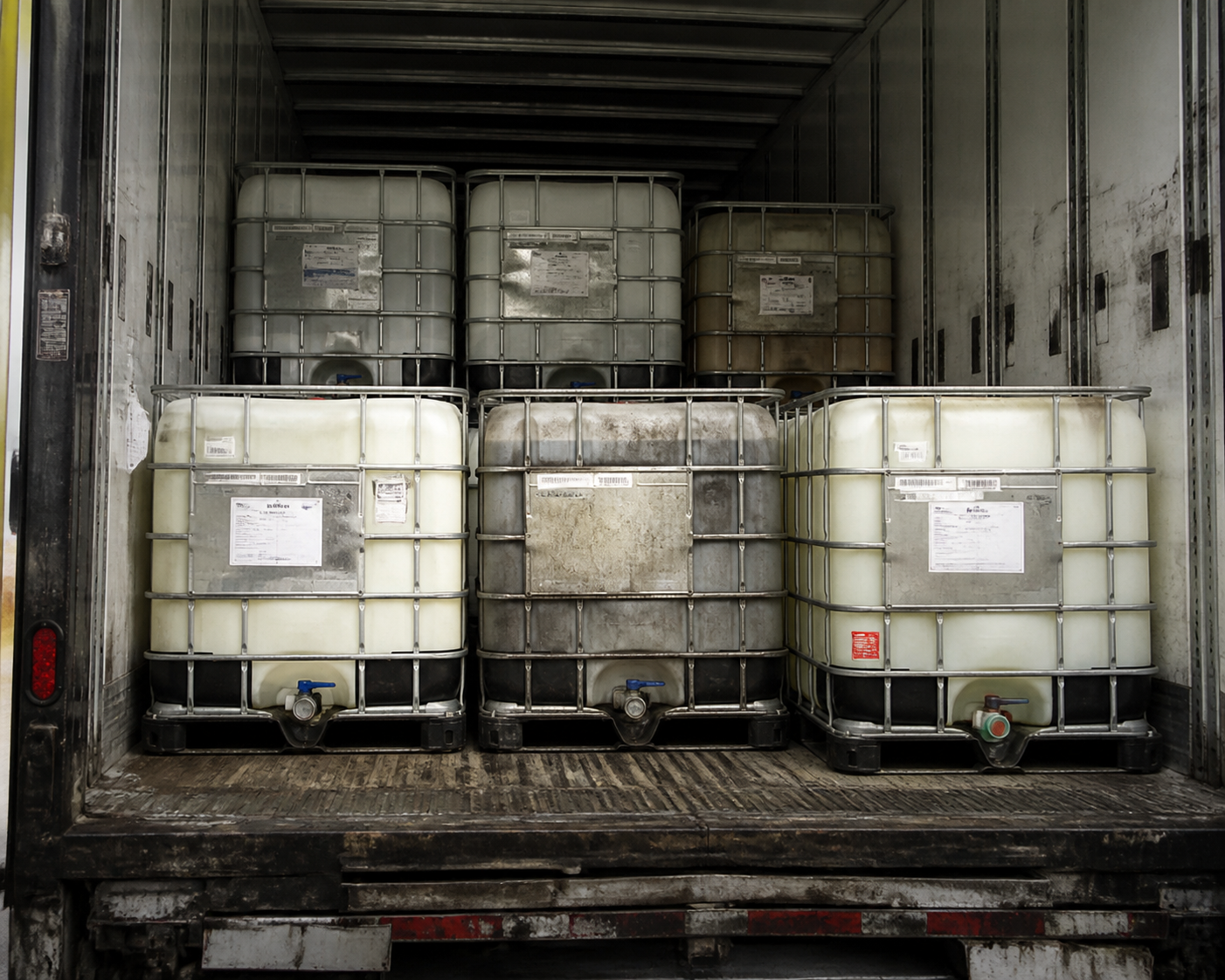
Standard IBC totes have an HDPE plastic bottle, and plastic is an insulator. That creates a specific problem: you cannot simply clamp a ground wire to a plastic wall and expect charge to drain, because the plastic does not conduct. Worse, the plastic surface itself can hold a charge, and the liquid inside can be charged while the container gives you nowhere to bond.
The steel cage can be grounded, but grounding the cage does not necessarily drain charge from the liquid or the plastic bottle. This is why a standard plastic tote is generally not appropriate for handling low-conductivity flammable liquids without additional engineered controls. Recognizing this limitation is essential before you plan a flammable transfer.
Conductive and Dissipative Totes
For flammable service, manufacturers make totes designed to handle static. Conductive or dissipative totes use special plastics or built-in conductive paths so charge can be drained through a grounding point rather than accumulating. These are the correct tool when you must store or dispense flammable liquids in an IBC-format container.
If a job involves regularly handling flammable liquids in totes, specify totes that are rated and constructed for that duty rather than adapting a standard container. When in doubt, treat a standard plastic tote as unsuitable for flammable transfer and get equipment engineered for the hazard. Also confirm any Type approval and UN rating required for the specific product and quantity.
NFPA Basics and Safe Transfer Practice
NFPA 77 addresses static electricity and NFPA 30 covers flammable and combustible liquids; together they set the framework most facilities follow. The overarching principle is to remove ignition sources and control charge accumulation during every transfer. Written procedures and trained operators matter as much as the hardware.
Beyond bonding and grounding, several practices reduce the risk on the floor.
- Fill from the bottom or with a dip pipe to submerge the outlet and avoid splash filling.
- Keep flow rates moderate, especially at the start of a transfer before the outlet is submerged.
- Bond and ground all containers and equipment before opening any valve, and keep them connected until transfer is complete.
- Control ignition sources nearby and provide adequate ventilation for vapors.
- Verify grounding continuity regularly rather than trusting a clamp by sight.
Compliance Is a System, Not a Single Tote
Choosing the right container is necessary but not sufficient. Safe flammable handling is a system: the right rated tote, correct bonding and grounding hardware, submerged filling, ventilation, procedures and trained people. Skipping any one link can undo the rest. If your operation moves flammable liquids, review your setup against NFPA guidance and, where needed, consult a qualified safety professional.
The cost-and-sustainability logic still holds even for hazardous service, because reusing appropriate rated totes beats buying new, but safety sets the specification and safety comes first.
Get the Right Tote for the Hazard
We can help you identify totes suited to your product, including guidance on when a standard tote is fine and when your application demands totes engineered for flammable or static-sensitive service.
Describe what you are handling through our quote form or email info@ibctotessolutions.com, and we will help you match the container to the hazard safely and cost-effectively.