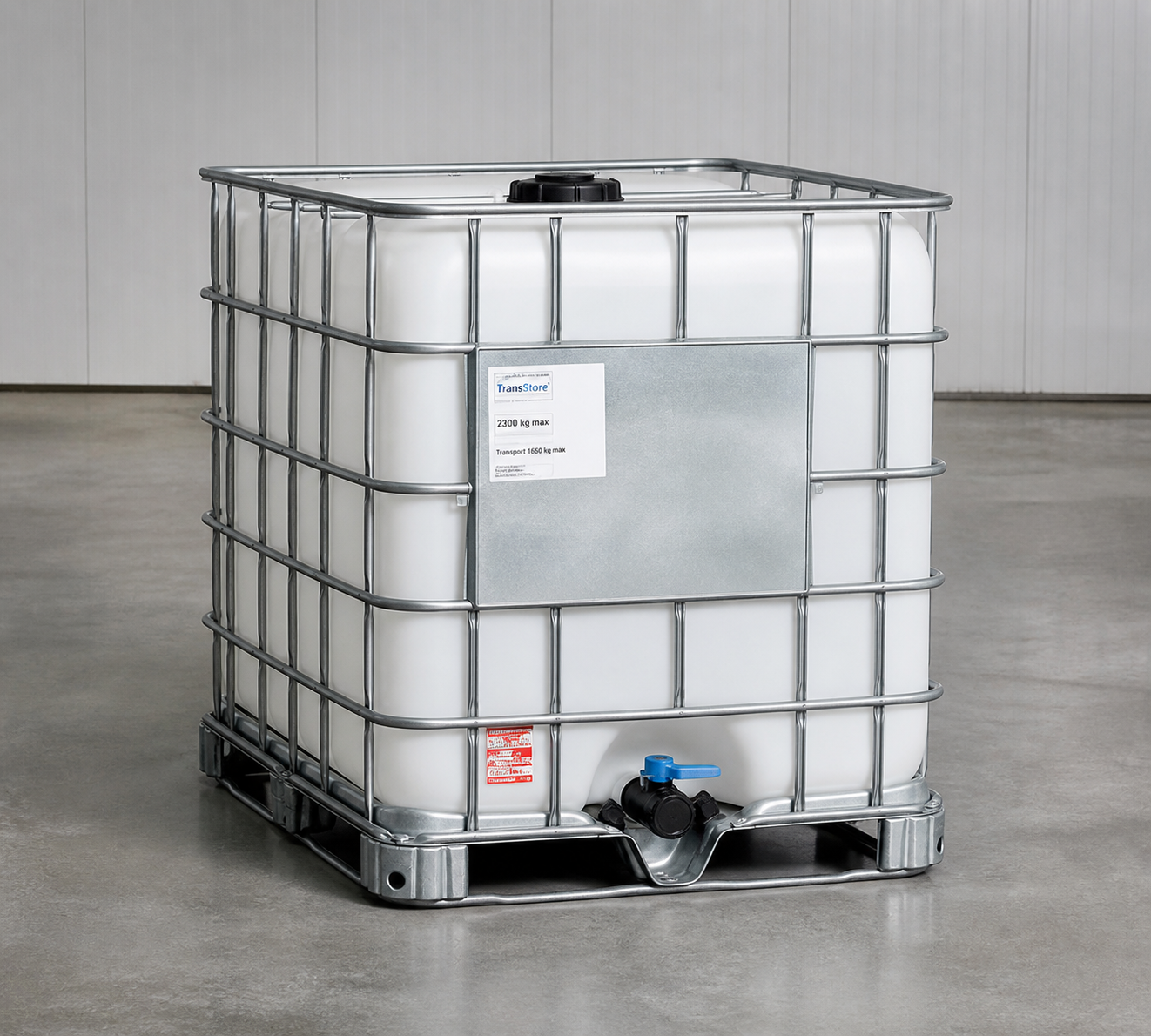
Why stacking discipline matters
A filled 275 gallon tote of water weighs on the order of 2,500 pounds, and denser products weigh more. Stack a few of those and you are managing tons of load balanced on plastic and steel. Poor stacking is a leading cause of tote failures, leaks and injuries, so the rules here are not bureaucratic, they protect people and product.
Good practice starts with knowing three numbers: the filled weight of your tote, the manufacturer's stacking rating, and the load rating of whatever is underneath, whether that is a floor or a rack.
Filled versus empty stack heights
The safe stack height depends entirely on whether totes are full. A full tote can bear the compressive load of another full tote through its cage, but only up to the rated limit. Empty totes are structurally weaker at the bottle and can crush or fold if you pile too many on top.
Use the following as conservative defaults and always defer to the manufacturer's marked rating.
- Filled totes: commonly two high, sometimes more only if the cage and rating allow.
- Empty totes: stack low and never place a filled tote on top of an empty one.
- Never stack partially filled totes with sloshing liquid, which destabilizes the load.
- Keep aisles clear and align cages squarely so weight travels straight down the corners.
Floor load ratings
Before you stack, confirm your floor can take it. Warehouse slabs, mezzanines and especially upper floors all have load limits, and a dense cluster of filled totes concentrates enormous weight over a small footprint of roughly 40 by 48 inches each.
Spread heavy loads across rated areas, avoid placing tall stacks over unknown or older slabs, and never stack on soft, uneven or frost heaved ground where a tote can tip.
Rack storage done right
Racking lets you store totes densely without stacking them directly on each other, which is often safer and easier to access. But racks have their own beam and frame ratings, and a tote's weight must sit within them with a safety margin.
When racking totes, get the fundamentals right so nothing shifts or falls.
- Confirm beam capacity exceeds the total filled weight of the totes it carries.
- Support the pallet base fully; never let a tote bridge across a gap.
- Load lower rack levels with the heaviest units to keep the center of gravity low.
- Inspect beams and connectors for damage before loading heavy inventory.
Secondary containment and spill risk
For many liquids, storage rules require secondary containment that can hold a percentage of the stored volume in case of a leak. Even where it is not mandated, a containment pallet or berm is cheap insurance against a costly cleanup and a regulatory problem.
Position valves so they are visible and protected from forklift strikes, and keep spill kits nearby. A leak caught early is a mop up, while one caught late is an environmental incident.
UV exposure and outdoor storage
HDPE degrades under sustained ultraviolet light. Left in direct sun for long periods, the bottle yellows, becomes brittle and eventually can crack, and the contents of some products degrade with light and heat too. Outdoor storage is workable but demands protection.
If you must store totes outside, take steps to slow UV and weather damage and keep the cage from rusting.
- Shade totes with a cover, canopy or opaque wrap that still allows valve access.
- Keep totes off bare ground on pallets to avoid standing water and cage corrosion.
- Allow for expansion; leave headspace and account for freeze risk in cold climates.
- Rotate stock so no single tote bakes in the sun for months on end.
Inspection and housekeeping
A quick routine inspection catches problems before they become failures. Look for bulging bottles, cage rust or broken welds, weeping valves and leaning stacks. Label every tote with its contents and date so nothing sits forgotten past its useful life.
Well kept totes also hold their resale value. A container stored dry, shaded and undamaged can be reconditioned and returned to service, whereas a sun rotted, rusted unit may only be worth its salvage parts.
Store smart, extend tote life
Safe stacking and storage come down to respecting weight, ratings and the weather. Know your filled weight, honor the stacking and rack limits, contain spills and shield the plastic from UV, and your totes will stay safe and serviceable far longer.
IBC Tote Solutions buys, sells and reconditions totes and can advise on storage setups or take well kept empties off your hands. Reach us through our quote form or email info@ibctotessolutions.com.