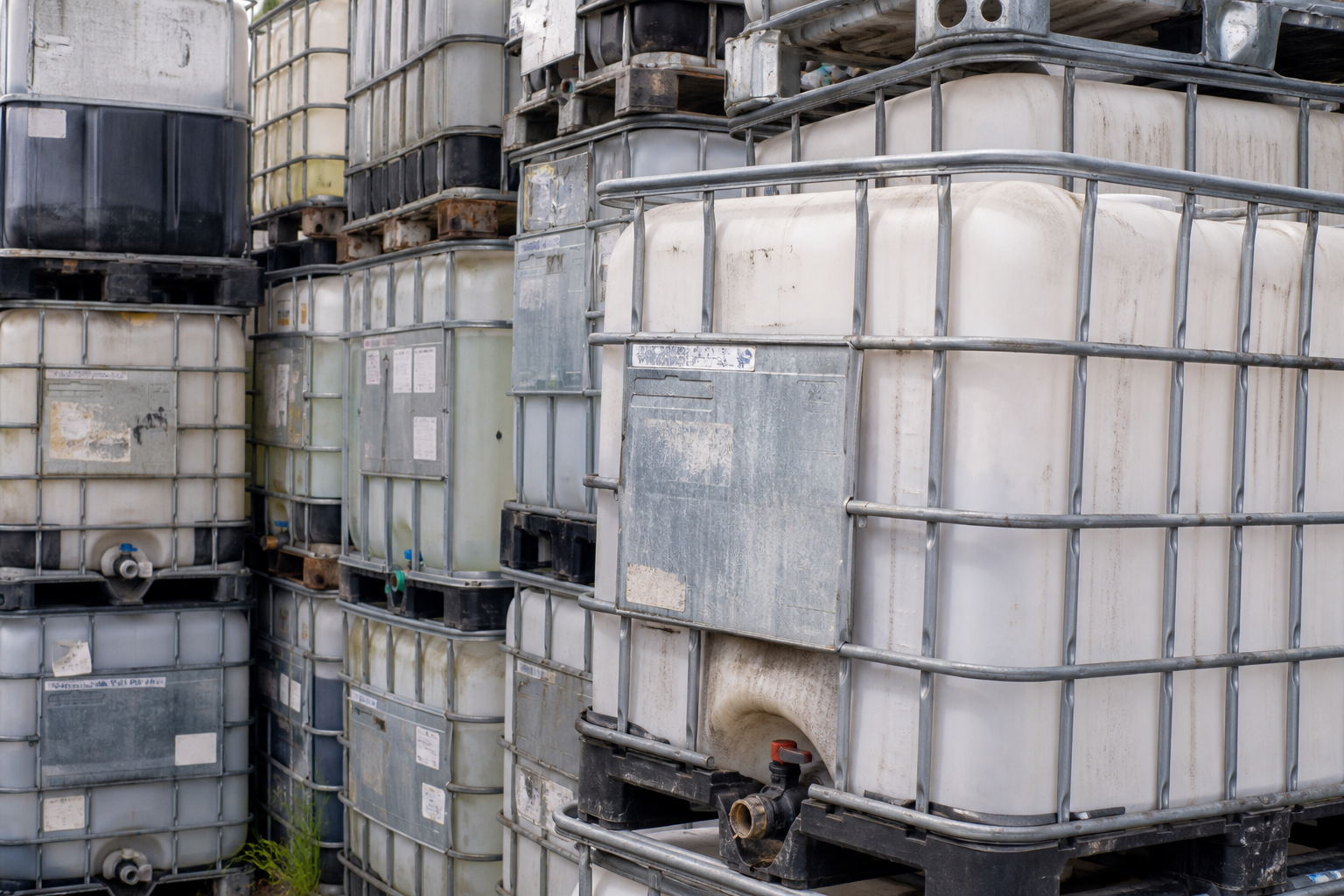
Two ways to give a tote a second life
When a used intermediate bulk container comes back, it can be returned to service in more than one way. The two most common are reconditioning and rebottling. Both keep the durable galvanized cage and pallet in circulation, and both cost less and use fewer raw materials than a fully new tote, but they treat the plastic bottle very differently.
Knowing the difference helps you buy the right container for your product without overpaying for purity you do not need, or underpaying and contaminating a sensitive batch.
What reconditioned means
A reconditioned tote reuses the original HDPE bottle. The container is emptied, inspected, washed and often triple rinsed or pressure cleaned, then leak tested. The cage is straightened or repaired as needed, the valve and cap are replaced or refurbished, and the whole unit is checked before it ships again.
This is the greenest and usually the least expensive option. Nothing about the bottle is remanufactured, so no new resin is consumed. The tradeoff is that the interior carries a cleaning history rather than a pristine surface, so the prior contents and the quality of the wash matter.
What rebottled means
A rebottled tote keeps the reused steel cage and pallet base but drops in a factory new HDPE bottle. You get a genuinely fresh, never used interior with no contents history, while still avoiding the cost and material footprint of manufacturing a new cage and pallet from scratch.
Rebottled sits between fully reconditioned and fully new on both price and purity. It is popular when the product is sensitive but the buyer still wants the savings and sustainability of reusing the metal structure.
Purity: the deciding factor
The main reason to choose one over the other is how sensitive your product is to trace residue. HDPE can retain faint traces of certain chemistries even after a thorough wash, so for some applications only a new bottle will do.
Use this as a rough guide, and always confirm against your own quality requirements and any regulatory standard your product must meet.
- Reconditioned suits water, many industrial chemicals, cleaners, waste collection and non sensitive liquids.
- Rebottled suits fragrance sensitive, food adjacent, cosmetic or high purity chemistry needs.
- Fully new is warranted only when even a reused cage is unacceptable or a certified virgin package is required.
- When in doubt, request a bottle that only ever held a compatible or inert prior product.
Cost and material tradeoffs
Reconditioned is typically the lowest cost because the most expensive component, the molded bottle, is reused as is. Rebottled costs more because a new bottle is purchased, but still less than a completely new tote because the cage and pallet are reused. New commands the highest price and the largest resource footprint.
From a sustainability standpoint, every reconditioned tote that goes back into service avoids the energy and virgin plastic tied up in a new bottle. Rebottling still captures most of the environmental win by keeping the steel structure in the loop, which is significant given how energy intensive galvanized steel is to produce.
How to decide for your use case
Start with the product and work outward. If your liquid is robust and forgiving, reconditioned gives you the best value with the smallest footprint. If your product is sensitive to residue or you serve customers who expect a fresh interior, rebottled or new is the safer call.
Also weigh how the tote will be used downstream. A container that will be refilled many times in a closed loop justifies investing in a fresh bottle up front, while a single trip or waste application rarely does.
Grades, valves and fittings still matter
Whichever route you pick, confirm the details that affect fit and function. Check the discharge valve style and the fitting thread, commonly 2 inch NPT, so it mates with your pumps and hoses. Confirm the cage grade and that any dents or rust have been addressed, and verify the fill cap seals cleanly.
A reconditioned or rebottled tote should arrive leak tested and ready to fill. If it does not, the savings evaporate the first time it fails on your line.
Getting the right container
Rebottled and reconditioned totes both let you buy smart and buy green. The choice comes down to how much purity your product demands and how the container will earn its keep over time. Match the option to the job and you avoid both overspending and contamination risk.
IBC Tote Solutions supplies reconditioned and rebottled totes and can help you match grade and interior to your product. Tell us what you plan to store through our quote form or email info@ibctotessolutions.com and we will recommend the right build.