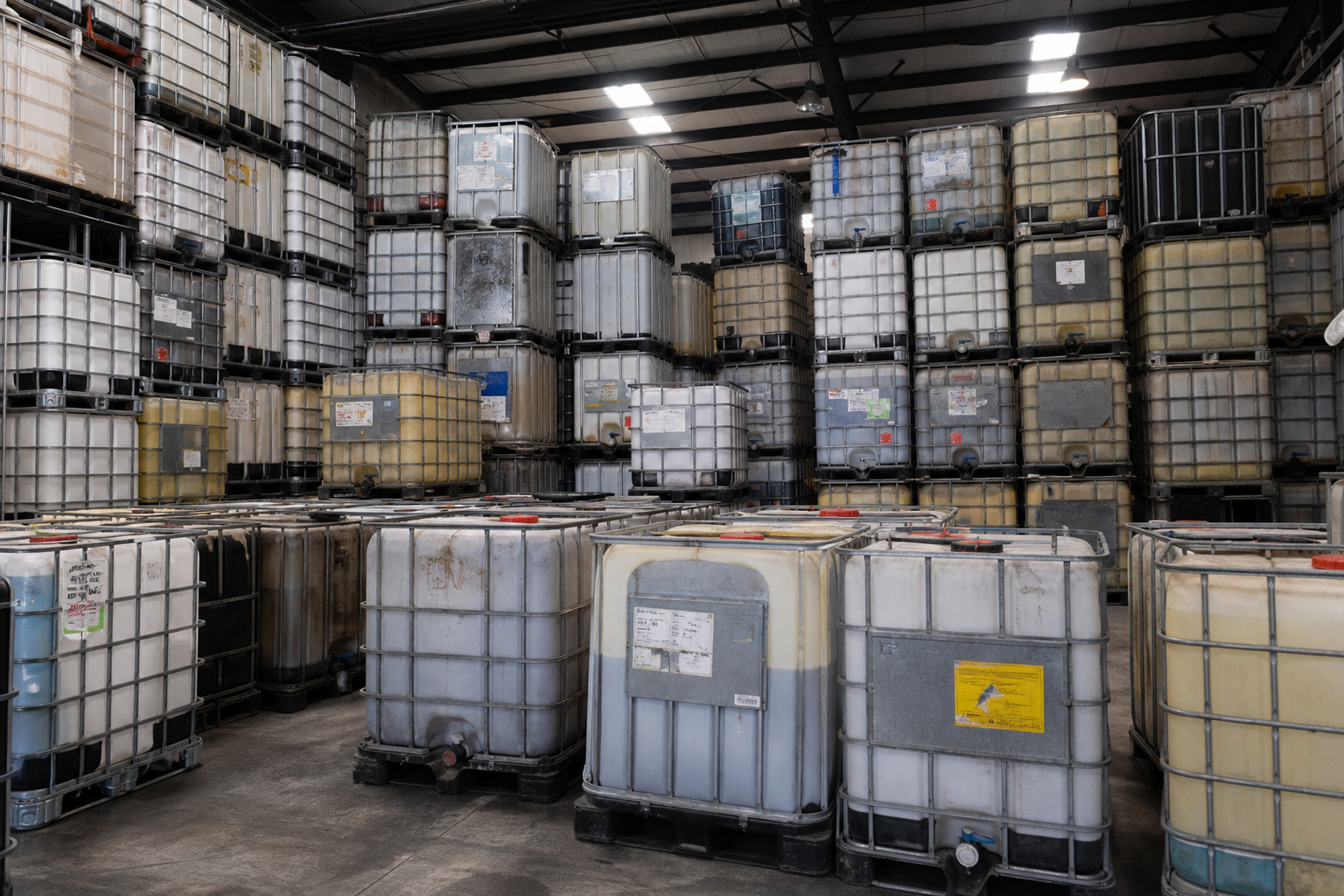
Why a Careful Inspection Pays for Itself
A used IBC tote can cost a fraction of a new one, and reusing a container that would otherwise be scrapped is the greenest move a buyer can make. But not every used tote is worth the same money. The difference between a bargain and a headache is a fifteen-minute inspection that anyone can learn.
The goal is simple: confirm the tote will hold your product safely, survive handling, and meet any rules that apply to your operation. Work through the container from the inside out and top to bottom so nothing gets skipped. If you buy remotely, ask the seller to send photos of each item on this list before you commit.
At IBC Tote Solutions we grade every reconditioned unit against these same points, but knowing the checklist yourself makes you a smarter buyer no matter where you shop.
Start With the Bottle
The inner bottle is the part that actually contains your product, so it gets first attention. Most bottles are blow-molded high-density polyethylene with a nominal capacity of 275 or 330 gallons. Walk around the container in good light and look through the translucent wall.
Cloudiness or a chalky haze can mean the plastic has been sun-aged and is losing flexibility. A brittle bottle is far more likely to split under a full load or in cold weather. Hairline stress cracks tend to appear near the bottom corners and around the fill and discharge fittings, so study those areas closely.
- Check the four bottom corners where load stress concentrates
- Look for star-shaped stress marks around the top fill opening
- Press gently on the wall; healthy plastic flexes and returns
- Reject any bottle with weeping, staining, or a permanent bulge
- Note the wall thickness rating if you plan to stack loaded totes
Read the Cage and Its Welds
The galvanized steel cage carries the weight and protects the bottle during forklift handling. A bent or sprung cage is the most common damage on returned totes because it happens every time a fork tine catches a bar.
Sight down each vertical and horizontal bar to confirm it is straight. Then check the welds at the joints. A cracked or popped weld will let the cage flex and can eventually chafe the bottle. Surface rust is cosmetic and normal on older galvanizing, but flaking rust that has eaten through a bar is a structural concern. A slightly tweaked cage may still be fine for stationary storage but is a poor choice for repeated shipping.
Do Not Ignore the Pallet Base
The base is easy to overlook and expensive to discover after the fact. IBC bases come as steel, plastic, or composite, and each fails differently. A steel base can rust at the feet where it sits in standing water. A plastic base can crack from a hard drop or a mis-aimed fork.
Tip or rock the tote gently and watch how the base responds. Any wobble, split runner, or missing foot means the tote will not sit securely on a rack or truck bed. For food or pharmaceutical work, a plastic or composite base is usually preferred because it will not corrode or shed splinters.
Test the Valve, Gasket, and Cap
The discharge valve at the bottom and the fill cap at the top are your two seal points, and both are frequent leak sources on used units. Open and close the valve to feel whether the mechanism is smooth and whether it seats fully shut. A ball or butterfly valve that will not fully close is a slow leak waiting to happen.
Inspect the valve gasket and the cap gasket for cracking, flattening, or the wrong material for your product. Gaskets are cheap to replace, so a bad gasket alone should not kill a deal, but it should factor into your price. Confirm the outlet thread size and cap size match the fittings and pumps you already own, since mismatched threads are a common surprise after delivery.
Smell the Interior and Verify Prior Contents
Open the top cap and smell the inside. A clean reconditioned tote should smell like plastic and nothing else. A chemical, solvent, or sour odor tells you residue remains and that the container was not properly washed.
Just as important, find out what the tote held before. A container that carried a food-grade syrup is a different animal from one that carried an industrial coating. Ask the seller directly and look for a prior-product label or lot sticker. Never assume a rinsed tote is safe for a sensitive application. When history is unknown or the previous contents are incompatible with your use, choose a professionally reconditioned unit instead.
- Clean plastic odor only means a proper wash
- Solvent or sweet chemical smell means residue remains
- Musty or sour smell can indicate trapped water or biological growth
- Match prior contents to your product for chemical compatibility
- When in doubt, buy a washed and certified reconditioned tote
Find and Read the UN Plate
If you will ship regulated liquids, the UN marking plate is not optional. It is the metal or embossed plate on the cage that certifies the tote met an approved design test. The code tells you the packaging type, the packing groups it is rated for, the year of manufacture, and the country of approval.
Regulations limit how long a composite IBC may be used for hazardous transport after its manufacture date, and periodic retest dates also appear on or near the plate. A missing, painted-over, or unreadable plate means you cannot legally use that tote for regulated shipping, even if the container itself is sound. For non-regulated storage or reuse projects the plate matters less, but the manufacture date still tells you the age of the plastic.
Turn the Checklist Into a Confident Purchase
Buying used is almost always cheaper than new and keeps a durable container in service rather than in a landfill. A short, disciplined inspection is what turns that savings into a safe, reliable purchase rather than a gamble. Photograph anything questionable and use it to negotiate a fair price.
If you would rather skip the guesswork, IBC Tote Solutions inspects, washes, and grades every tote we sell against these exact criteria, so you know the bottle, cage, base, valve, and plate before it ships. Tell us your product and volume and we will match you to the right grade. Reach out through our quote form or email info@ibctotessolutions.com and we will help you buy with confidence.