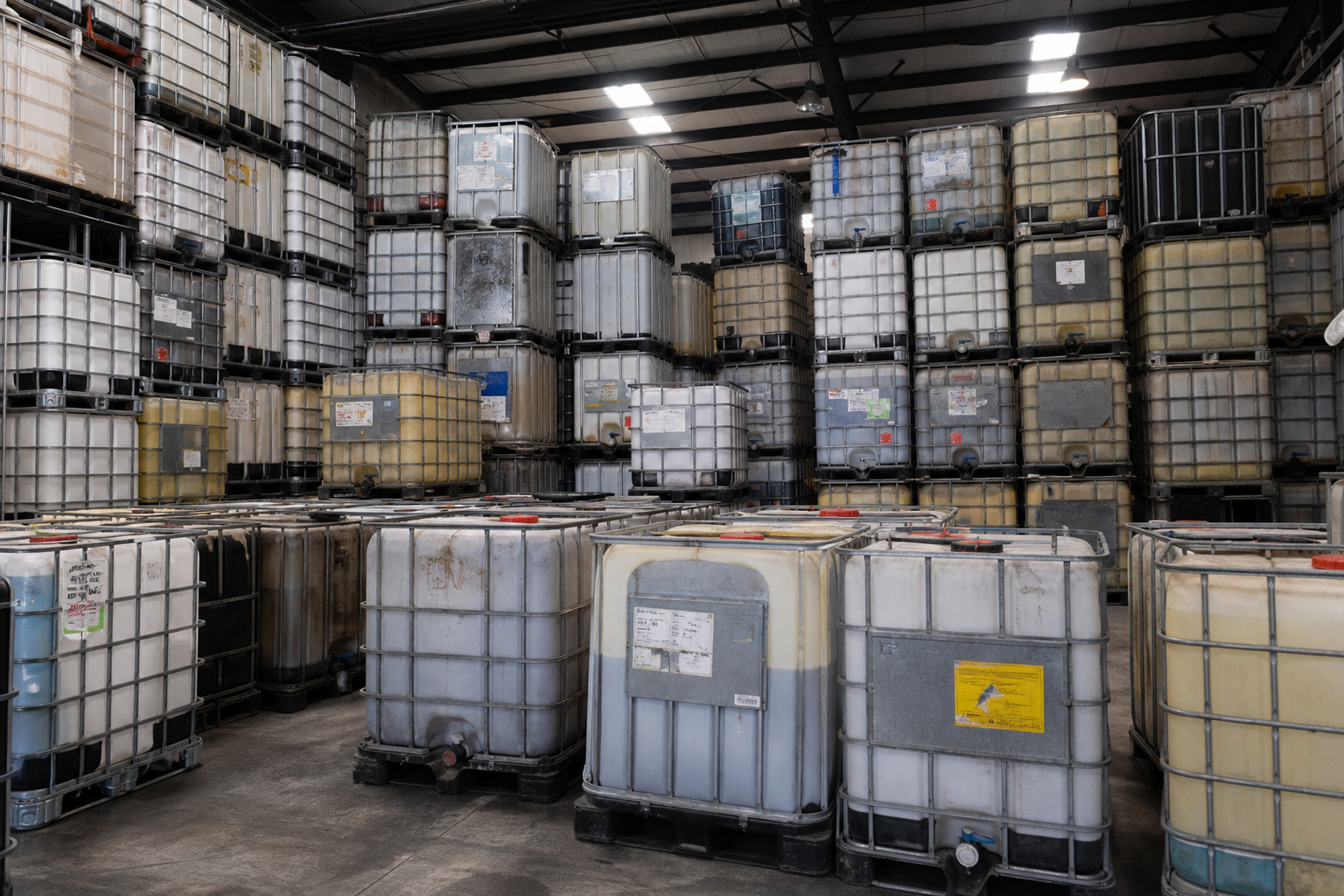
Start by Knowing What Was in It
Before you touch a hose, find out what the tote last held. This single step drives every decision that follows. A tote that stored a food-grade syrup needs a very different process than one that held an industrial surfactant, and a container that carried anything hazardous should never be casually rinsed and reused without proper handling.
Check the label, the previous contents documentation, and any placarding. If the history is unknown or the residue is unidentifiable, treat it as potentially hazardous and do not attempt a home cleanout. Unknown chemistry can react with water or cleaning agents, release fumes, or leave residues that are unsafe for the next product. When in doubt, route it to a professional reconditioner who can test and handle it correctly.
Gear Up and Set Up Safely
Cleaning is wet, sometimes chemical, and always physical. Protect yourself and control the runoff. Work outdoors or in a well-ventilated area with proper drainage or containment, never letting wash water flow into a storm drain or watercourse if it may carry residue.
At minimum you want chemical-resistant gloves, splash goggles, and closed footwear, plus an apron or coveralls for messy jobs. Have your capture plan ready for wash water, since even a food residue rinse can carry sugars or oils that a municipality may not want in storm drains.
- Chemical-resistant gloves and splash goggles
- Apron or coveralls and closed-toe footwear
- A means to capture and dispose of wash water responsibly
- Hot water source, pressure washer or wand if available
- Appropriate detergent and food-safe sanitizer for the job
- A way to fully drain and dry the bottle afterward
The Triple-Rinse Foundation
The triple-rinse is the backbone of IBC cleaning and mirrors the accepted method for cleaning containers of non-hazardous residues. Fill the bottle with clean water to roughly 10 to 20 percent of capacity, seal the lid, and agitate so the water contacts all interior surfaces. Then drain completely through the valve. Repeat this three times.
Each rinse dilutes the remaining residue by roughly an order of magnitude, so three rinses take you from full residue to a tiny fraction of the original concentration. Drain fully between rinses, because leftover water dilutes your next rinse and reduces its effectiveness. Rotating or rocking the tote helps the water sweep the corners and the baffle areas where product likes to hide.
Hot Wash to Break Down Residue
Cold rinsing removes what is loose, but films, oils, sugars and dried product need heat and chemistry. A hot wash with water in the 140 to 180 degree Fahrenheit range and an appropriate detergent dissolves and lifts stubborn residue far better than cold water alone. Alkaline detergents cut oils and greases, while mild acids can address mineral or scale buildup.
If you have a pressure washer with a wand that fits through the top opening, use it to blast the walls, floor and corners. Let hot detergent solution dwell for several minutes before agitating and draining so it has time to work. After the detergent wash, rinse thoroughly with clean water until no suds or slickness remain, then confirm the drained water runs clear.
Sanitizing, and Why Drying Matters
Cleaning removes soil, sanitizing kills microbes. If the tote will hold food, beverage ingredients, rainwater for irrigation, or anything where microbial growth matters, add a sanitizing step after the container is visibly clean. Common food-safe options include a dilute chlorine solution, hydrogen peroxide based sanitizers, or a peracetic acid blend, each used at the manufacturer specified concentration and contact time.
After sanitizing, give a final rinse if the product requires it, then dry the interior as completely as possible. Moisture left in a sealed tote is an invitation for mold, biofilm and off-odors. Leave the lid and valve open, invert or tilt to drain, and use airflow to speed drying. A tote that is clean but stored wet can undo all your work within days.
When to Stop and Recondition or Rebottle Instead
DIY cleaning has real limits. Some situations call for professional reconditioning or a completely new HDPE bottle dropped into the existing cage, a process called rebottling. Reconditioners have hot wash systems, caustic baths, controlled drainage, testing, and disposal channels that a typical facility cannot match.
Rebottling is often the smartest, greenest answer when the bottle is stained, scented, or was used for a product you cannot fully verify as removed. You keep the valuable galvanized steel cage and pallet in service and only replace the plastic, giving you an essentially food-clean interior at far less cost and material use than an entirely new tote.
- Previous contents were hazardous, unknown, or strongly odorous
- Residue is dried, crystallized, or bonded to the walls
- The tote will move to food, beverage or sensitive use
- Persistent staining or smell survives a thorough wash
- You lack proper wash water containment and disposal
Cleaner, Greener, and We Can Handle It
Properly cleaning and reusing a tote keeps a durable container working instead of scrapping it, which is both cheaper and far better for the planet than manufacturing new. When a job is beyond a DIY rinse, professional reconditioning and rebottling deliver a verified result without the waste.
If you have used totes that need cleaning, reconditioning or rebottling, or you simply want a container you can trust for your next product, reach out through our quote form or email info@ibctotessolutions.com and we will help you find the safest path.