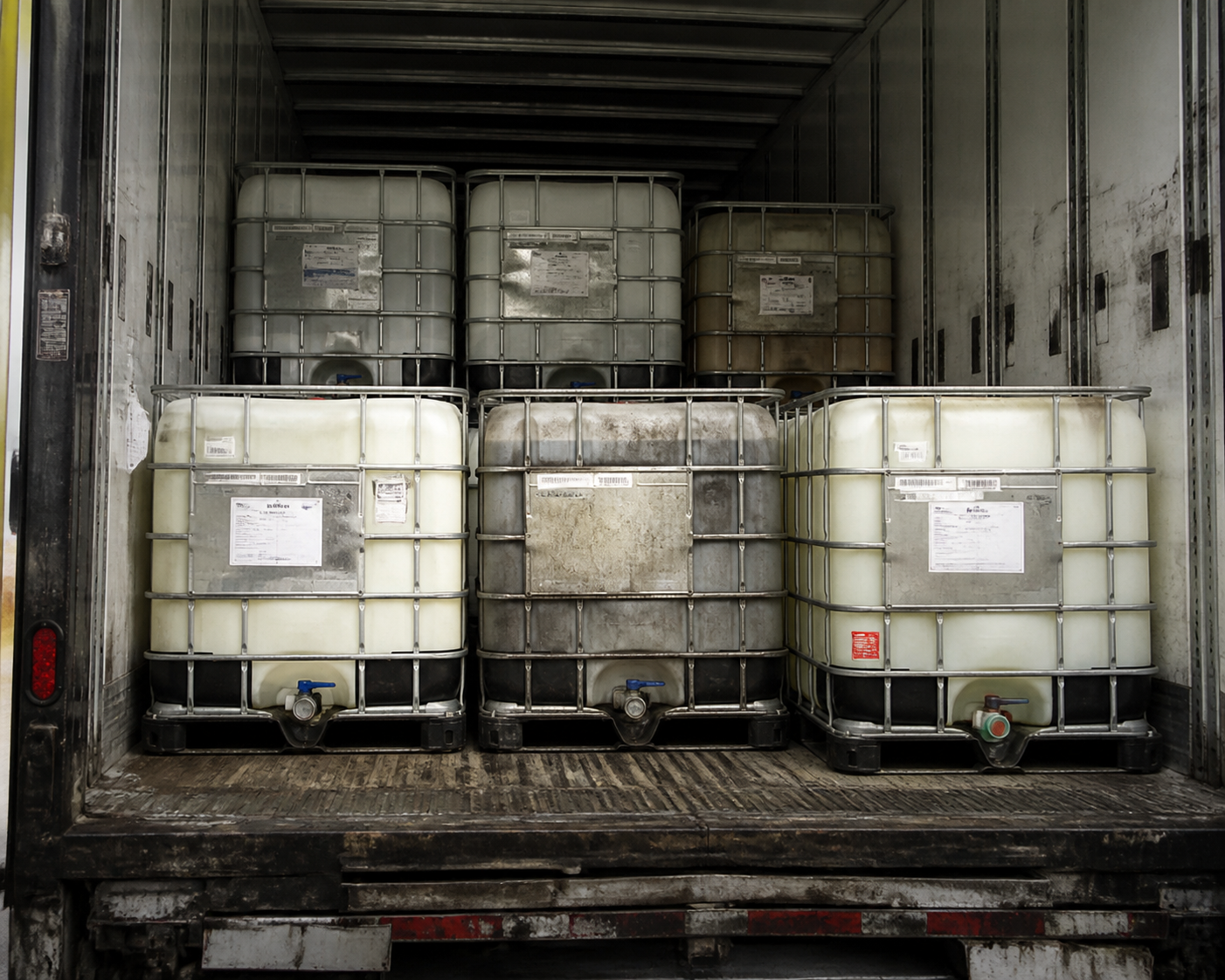
The bottle and the seals are two decisions
Chemical compatibility for an intermediate bulk container is not one question but several. The HDPE bottle, the discharge valve seat, the valve gasket and the cap seal can each be made of different materials, and a liquid that is fine against the plastic can still attack a seal. Getting this right prevents leaks, swelling, cracking and dangerous failures.
This guide covers the general behavior of high density polyethylene and the two most common elastomers used for gaskets, EPDM and Viton. Always confirm against a current compatibility chart and your product safety data sheet before filling.
What HDPE handles well
High density polyethylene is chemically resistant and inexpensive, which is why it is the standard tote bottle material. It shrugs off water and a broad range of everyday industrial and agricultural liquids, making it a workhorse for storage and transport.
As a general rule, HDPE is comfortable with the following families, at typical ambient conditions.
- Water, brines and most aqueous salt solutions.
- Many dilute and moderate acids such as sulfuric, hydrochloric and phosphoric.
- Caustics and bases like sodium hydroxide and potassium hydroxide.
- Alcohols, glycols and most detergents and cleaners.
- Many water based agricultural inputs and fertilizers.
What to avoid or handle with caution
HDPE has real limits. Strong oxidizers can attack the polymer over time, and many nonpolar solvents cause it to swell, soften or become permeable. Some liquids do not damage the plastic quickly but permeate through the wall, letting vapor escape and weakening the container.
Treat the following as red flags that call for expert review or a different container material altogether.
- Strong oxidizers such as concentrated nitric acid and strong hypochlorite over time.
- Aromatic and chlorinated solvents like toluene, xylene and methylene chloride.
- Many fuels, oils and hydrocarbons, which can permeate HDPE.
- Hot liquids near or above the plastic softening range.
- Anything with a very low flash point, which raises static and vapor concerns beyond the plastic itself.
Temperature, concentration and time
Compatibility is never just about the chemical name. Concentration, temperature and contact duration all shift the outcome. A dilute acid at room temperature may be perfectly fine while the concentrated form at elevated temperature is aggressive. Long term storage stresses a container far more than a brief transfer.
HDPE also loses strength as it warms, so a liquid that is safe cold may deform a tote when hot. When your conditions differ from a standard ambient reference, derate your expectations and verify.
EPDM versus Viton gaskets
The valve gasket and cap seal are where many compatibility failures actually start. The two dominant choices behave almost oppositely, so matching the elastomer to the chemistry is essential.
EPDM excels with water based and polar chemistry, hot water, steam, many acids and bases, but it is poor with oils, fuels and hydrocarbons. Viton, a fluoroelastomer, excels with fuels, oils, aromatic and chlorinated solvents and many aggressive chemicals, but it is a poor choice for hot water, steam and certain ketones and amines.
- Choose EPDM for water, acids, bases, glycols and most water based products.
- Choose Viton for fuels, oils, solvents and aggressive or aromatic chemistry.
- Never assume the factory gasket matches your product; confirm the material.
- When a chemical straddles both charts, consult the manufacturer before filling.
Static, venting and grounding
Even a chemically compatible package can be unsafe if you ignore physics. Transferring flammable or low conductivity liquids can build static charge, so bonding and grounding are critical. Filling and emptying also demand proper venting, since a sealed tote can collapse under vacuum or bulge under pressure as temperature swings.
Follow the relevant handling standards for your product, use compatible pumps and hoses, and never modify a valve or cap in a way that defeats its seal or vent.
Documentation and reuse
Keep the safety data sheet for whatever you store and label the tote clearly. This protects your team, and it preserves the container's resale value, because a buyer or reconditioner needs the contents history to grade and clean it correctly. A well documented tote is far easier to return to service later.
Compatible chemistry, the right gasket and clean records together mean a tote can be reused many times, which is both cheaper and dramatically greener than single use packaging.
Get the match right the first time
HDPE covers a huge range of liquids, but the exceptions are the ones that cause expensive failures, and the gasket is just as important as the bottle. When your chemistry is aggressive, unusual or stored hot, verify before you fill rather than after a leak.
IBC Tote Solutions can help you spec the right bottle, valve and gasket for your product and source compatible reconditioned or new totes. Describe your liquid through our quote form or email info@ibctotessolutions.com and we will point you to a safe configuration.